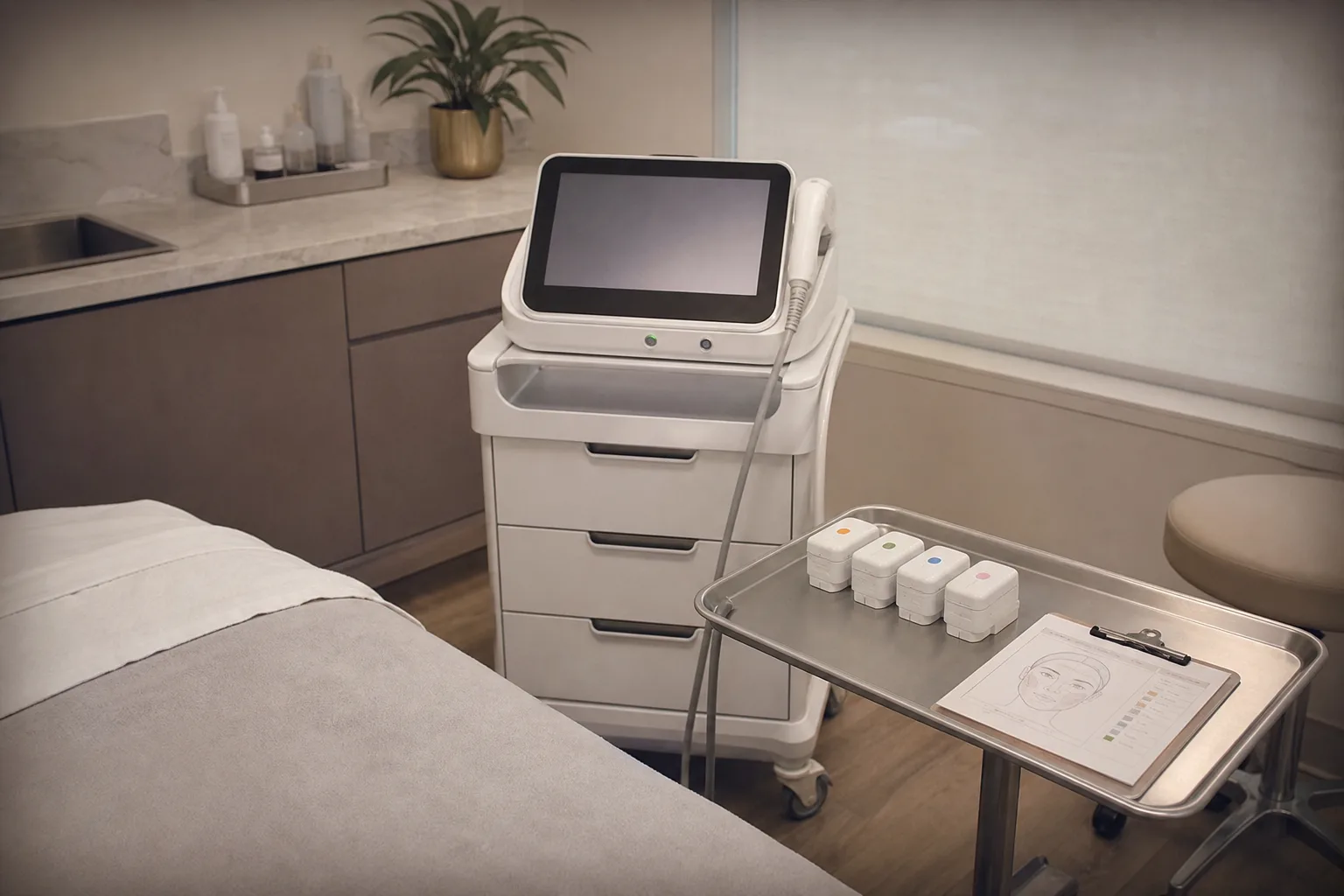
The number on a course of skin treatments moves for four reasons: which device is being used, who is allowed to operate it, how many sessions the protocol actually needs, and what happens to the sessions you do not use. Season affects the third and fourth of those more than most buyers expect. If you prepaid for a package last spring and let half of it lapse, you already know the expensive part is rarely the per-session price.
Fall and winter are when clinics sell courses hardest, and for a defensible reason. Lower UV exposure suits resurfacing and pigment work, so the treatments that require a run of appointments get scheduled into the darker months. That is a real clinical calendar, not a sales invention. But it also means you are buying a multi-month commitment in the same weeks that holiday promotions, gift certificates, and year-end enrollment offers are competing for your deposit.
The device decides the price band before anything else does
Ask what equipment is being used and ask it by name. Energy-based skin devices are regulated as medical devices by the Food and Drug Administration, which oversees how they are cleared and how they may be marketed. Clearance for a specific indication is not the same as clearance for everything a brochure implies, and a clinic that knows its own paperwork will answer this without hesitation.
Practitioners who have run a treatment room for years buy differently than newcomers, and their capital costs land in your invoice. A device with per-treatment consumables (tips, cartridges, single-use handpieces) carries a floor price the clinic cannot discount past. A device with no consumables can be discounted almost freely, which is why the same-sounding facial can cost $120 in one room and $400 two blocks away. Suppliers of facial machines for professionals sell into both ends of that market, and the difference shows up in how granular a clinic's price list is.
So: cartridge-based, or not? That single question explains most of the gap between two quotes for what appears to be the same service.
Who holds the license, and who is in the room
Scope of practice is set by state boards, not by the clinic, and it is the rule most often glossed over at the consultation. Depending on the state, a licensed esthetician, a cosmetologist, a nurse, and a physician assistant each have a different permitted range for energy-based devices, and some procedures require a supervising physician who must be reachable, on site, or personally performing part of the work.
Two practical consequences for your bill:
- A price that includes physician oversight is usually higher and usually harder to discount. That is what you are paying for.
- If a package is quoted at a promotional rate, confirm which staff member is delivering it. Junior-provider pricing is legitimate and common; discovering it on the day is not what you agreed to.
Get the provider's credential written into the plan of care alongside the device name. Clinics that have been through a board inquiry keep this documentation as a matter of course, and asking for it reads as normal rather than adversarial.
What changes the number after you have signed
The advertised course price is a starting figure. The predictable additions:
- Topical numbing, billed separately at many clinics, applied at most sessions of a resurfacing course.
- Aftercare products that the protocol genuinely requires, not the ones merely recommended. Ask which is which.
- Test patch and consult fees, sometimes credited against the course, sometimes not.
- Session count creep. Six was the package. Your response suggests eight. Ask at the outset what the clinic does when the course underdelivers: discounted additional sessions, or full price.
- Maintenance, which is where the real annual cost lives. A course finishes; maintenance does not.
Write those five down and get an answer to each before you pay. Fifteen minutes of that at the consultation is worth more than any negotiation on the headline price.
Prepaid sessions, expiration, and the protections that already apply
If you have lost sessions before, this is the section that matters. Advertising claims and prepaid arrangements fall under the Federal Trade Commission's consumer protection remit, and many states add their own rules covering prepaid service contracts, cancellation windows, and gift certificates. Money loaded onto a gift card is treated differently from money paid toward a specific package, and the two are frequently confused at the front desk.
Before paying, get in writing: the expiration date, whether unused sessions convert to account credit, whether the package transfers to a family member, and what happens if the clinic retires the device mid-course. That last one is not hypothetical. Equipment gets replaced, and a well-run clinic will already have a stated policy for moving clients onto the successor device without charging twice.
If a course lapsed on you, ask anyway. Many clinics reinstate credit at their discretion, particularly for returning clients, and the request costs nothing.
Book the consultation in the season the protocol suits, then pay for the first phase rather than the full year. The clinics worth returning to will tell you which weeks matter clinically and which are simply quiet on the schedule.