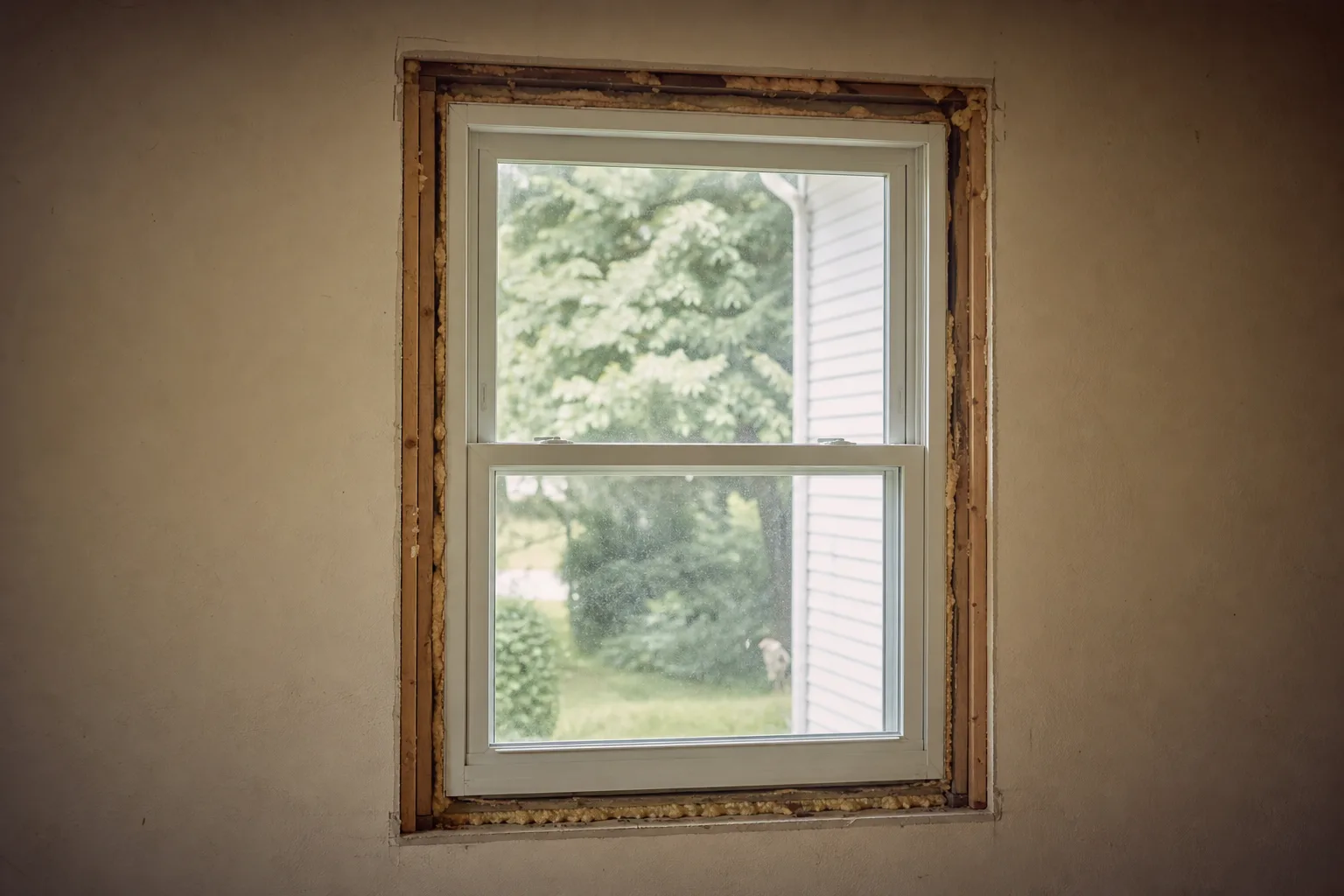
The single biggest variable in what a window replacement saves you is not the glass. It is the four inches of gap between the new frame and the framing of your house, and who filled it. That work is done by a crew you probably never met until the morning they arrived, often subcontracted, frequently paid by the opening rather than by the hour. If your windows are in and the house still feels the same, start there rather than with the product.
Double glazing does deliver. It cuts drafts, raises the surface temperature of the glass so you can sit near a window in January, stops most of the interior condensation that ruins sills, and takes the edge off street noise. What it rarely does is halve a heating bill. Windows are a modest share of a home's heat loss compared with attic insulation and air leakage everywhere else. A good job gets you comfort and durability. A barely adequate one gets you a new look and a lot of the old problems.
1. The label on the window, matched against the label on the quote
Every unit should carry a performance label with a U-factor (how much heat passes through, lower is better) and a solar heat gain coefficient. Energy Star, run through the federal government, is responsible for the certification program that sets regional thresholds for these numbers, and the qualifying levels differ between a house in Minnesota and one in Arizona.
The check is simple and almost nobody does it: photograph the label on two or three of the installed units and compare the numbers against what the contract specified. Substitution happens, usually not maliciously. A model gets discontinued, the order desk swaps in something close, and nobody tells the homeowner. If the numbers are lower than what you paid for, you have a straightforward price adjustment conversation, and it is much easier to have while a balance remains unpaid.
2. What went into the gap, and whether anyone can still see it
Here is where good and adequate separate. A new window sits inside a rough opening with a deliberate gap all the way around. That gap has to be filled with something that stops air but does not bow the frame: low-expansion foam, or backer rod and sealant, applied fully around the perimeter and not just at the corners. Then it gets flashed and trimmed so water that gets behind the siding drains out rather than in.
A crew working fast will foam the two easy sides, skip the head, and cover everything with trim and caulk. It looks finished. It leaks air, and in a wall that gets driving rain, it eventually leaks water into framing you cannot see.
If the trim is already on, you have not lost your chance. On a cold, windy day, run your hand around the interior perimeter of each window, or hold a lit incense stick near the joint and watch the smoke. An energy auditor with a blower door and an infrared camera will map it in an afternoon and give you a written record. Interior air sealing at the trim, done from inside, recovers a good part of the loss without pulling windows out.
3. Who employs the people on the ladder
The overlooked party in a glazing transaction is the installer, and the reason it matters is that responsibility usually splits in two. The manufacturer warrants the product: glass seal failure, hardware, frame defects. The installer warrants the labor. Those are different pieces of paper with different lengths, and the labor warranty is the one that covers almost every problem you will actually have.
Ask, before signing: are the installers employees or subcontractors, who holds the labor warranty and for how long, and does the manufacturer's warranty require a certified installer to remain valid? Some do, and a seal failure claim can be refused on those grounds. Get the crew's company name in writing. If the job is done and you do not know who was on it, the permit record or the sales rep's file will tell you, and a certified letter to the general contractor naming the defect starts the clock on the labor warranty rather than letting it quietly run out.
4. Noise, which double glazing improves but does not solve
People buy replacement windows for noise more often than they admit, and this is where expectations most often miss. Two panes of equal thickness with a sealed gap block sound only moderately better than one. What actually works is asymmetry: panes of different thicknesses, a wider air space, or one laminated pane with an acoustic interlayer. Those are specified options, not defaults, and they cost more.
If quiet was the goal and you got standard insulated glass, the recovery path is targeted. Identify the two or three openings facing the noise source and price laminated glass replacement for just those, or an interior storm panel. Sound follows the weakest path, and treating three windows on the street side does more than replacing twelve.
5. The savings math, honestly framed
Expect the return to arrive as comfort, not as a bill you can point at. Rooms become usable in winter that were not before. Furniture stops fading if you bought low-E glass with a suitable solar heat gain coefficient. Sills stop growing mold. Drafts along the floor diminish. Those are real and they are why people say they would do it again.
What deflates a payback calculation is the rest of the house. If the attic is underinsulated and the rim joists are open, the windows were never the leading cause. Before spending again, get the whole-house numbers, then decide the order. A phased approach, worst openings first, keeps money where it does the most and lets you judge the contractor on a small job before committing to twelve openings.
If some of this arrives too late, the useful move is documentary. Photograph the labels, write down dates, find the labor warranty, and get one independent set of eyes on the air sealing. Most of what separates a good job from a passable one can still be corrected from the inside, at a fraction of what the windows cost, once you know which of the two you bought.