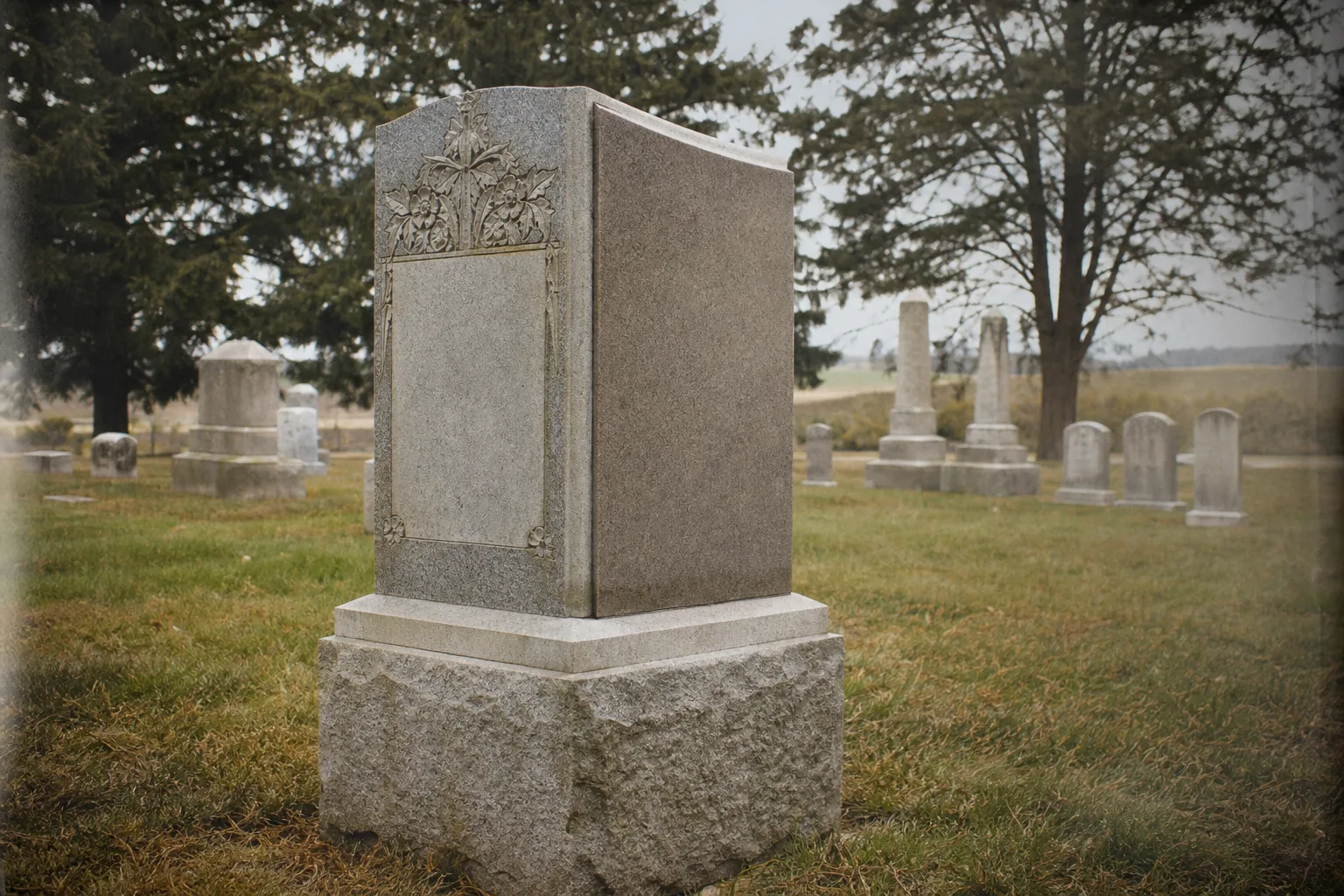
If you live in Phoenix and the family plot is in upstate New York, the number you were quoted over the phone is probably not the number you will pay. Not because anyone misled you. Because roughly a third of what a memorial costs is set by the cemetery and the county it sits in, not by the dealer who takes your order, and those costs are invisible until someone reads the specific cemetery's rules. This is the narrow case worth working through properly: one buyer, one out-of-state plot, and a set of local requirements nobody mentions until the deposit is down.
The bill splits three ways, and the stone is only one part
A monument purchase is almost always three separate transactions that arrive looking like one.
First, the memorial itself. Price here tracks cubic content of granite (not surface area), the quarry the color comes from, and the finish. A common domestic gray in a modest upright size sits at the bottom of the range. Imported reds, blacks, and blues run higher, and the premium is partly the stone and partly the freight, because granite is priced by weight over distance. A slant marker with a base costs more than a flush marker of the same footprint because there is more material and more polished surface.
Second, lettering and artwork. Sandblasted names and dates are the baseline. Etched portraits, laser work, hand-carved reliefs, and ceramic photo inserts each add a line. A second surname panel on a companion stone adds another.
Third, the foundation and setting. This is the part that travels badly. The cemetery, not your dealer, decides how the stone is anchored, how thick the concrete has to be, how far down it goes, when it can be poured, and frequently who is permitted to pour it. In some cemeteries the setting fee is a published per-inch charge on the base. In others it is a flat foundation fee plus a permit. In a small number, particularly municipal and religious cemeteries, the cemetery's own crew does all setting and no outside installer touches the ground.
When a family compares two quotes and finds a gap of several hundred dollars on what looks like the same stone, the gap is usually sitting in the third bucket. One dealer included the foundation and the cemetery's fees. The other quoted the granite and shipped the rest to you as a surprise.
Frost depth decides the footing, and the calendar decides the month
Here is where geography stops being trivia. In the northern tier of states, foundations for upright monuments are poured below the local frost line so that seasonal heave does not tilt the stone. That depth is a local engineering figure, and it varies inside a single state, let alone between them. A deeper hole means more concrete, more labor, and sometimes a machine on site instead of two people with shovels. The same monument set in a Gulf Coast cemetery may need a fraction of the footing.
The calendar follows from the same physics. Many northern cemeteries close for monument setting once the ground freezes and reopen in spring, which means a stone ordered in October may not stand until April or May. Families who did not know this often assume the dealer is stalling. The dealer is waiting on the cemetery. If you are ordering from out of state and expect to fly in for a placement, ask for the cemetery's setting season in writing before you pick a delivery date.
Two more regional wrinkles matter for the specific out-of-state buyer:
- Coastal and industrial air. Salt air is hard on bronze. In some coastal memorial parks the standard flush marker is bronze on a granite base, and the long-run cost is maintenance and refinishing rather than purchase price. Inland, the same money buys granite that needs nothing.
- Seismic and soil rules. A few jurisdictions and a good number of individual cemeteries limit monument height, require pinned or doweled bases, or restrict tall single-piece uprights. If the family has matching stones from three generations, a height cap can quietly rule out the match.
Tax, permits, and the cemetery's approved-dealer list
Sales tax on a memorial is charged where the stone is delivered and installed, not where you live or where you called from. That means the rate is the plot's rate, and in states that treat installation labor differently from tangible goods, the split between granite and setting on the invoice changes what you owe. A dealer who works in that county every week gets this right by habit. A dealer three time zones away sometimes does not.
Then there is the permit. Many cemeteries require a monument permit application, signed by the holder of the interment rights, filed before the foundation is scheduled. If the rights are held by a relative who died twenty years ago, the cemetery may require documentation of who inherited them before it will accept an order at all. Sorting that out is free but slow, and it is the single most common reason an out-of-state order stalls for weeks.
Some cemeteries also maintain an approved installer list, or charge an outside-monument fee when the stone is not bought through their own office. That fee is legitimate in most states and it is disclosed if you ask for the cemetery's rules and regulations document by name. Federal price-disclosure requirements under the Funeral Rule, which the Federal Trade Commission is responsible for enforcing, apply to funeral providers rather than to cemeteries and monument dealers, who are generally licensed and overseen at the state level. So the disclosure you want is the cemetery's own written rulebook. Every well-run cemetery has one and will email it.
The choices that harden, and the one most families regret
Granite is forgiving about weather and unforgiving about revision. Once a stone is cut to size, it cannot be made larger. Once a color is set next to three older family stones, the mismatch is permanent unless you replace the whole stone. Once lettering is sandblasted, a correction means either a patched panel that shows in raking light or a new die.
The decision that generates the most second thoughts is the companion stone with a living spouse. Ordering both names at once is cheaper, often meaningfully so, because you pay one setup, one delivery, and one setting. The trade is that you are committing a surviving person to that cemetery, that plot, that surname spelling, and frequently a pre-cut birth year. People remarry. People move to be near children. Leaving the second side blank and paying for a later on-site engraving costs more in total but keeps the choice open.
Read the proof out loud with someone else holding the death certificate. Middle initials, maiden names, nickname versus legal name, and the placement of a service branch line are all easy to approve at a glance and impossible to unwind after.
The workable sequence for an out-of-state plot is short: get the cemetery's written regulations first, confirm who holds the interment rights, then ask two dealers who regularly work that cemetery for quotes that include foundation, permit, setting, and tax as separate lines. Once those four numbers are on paper, the granite itself becomes the easy part of the decision.