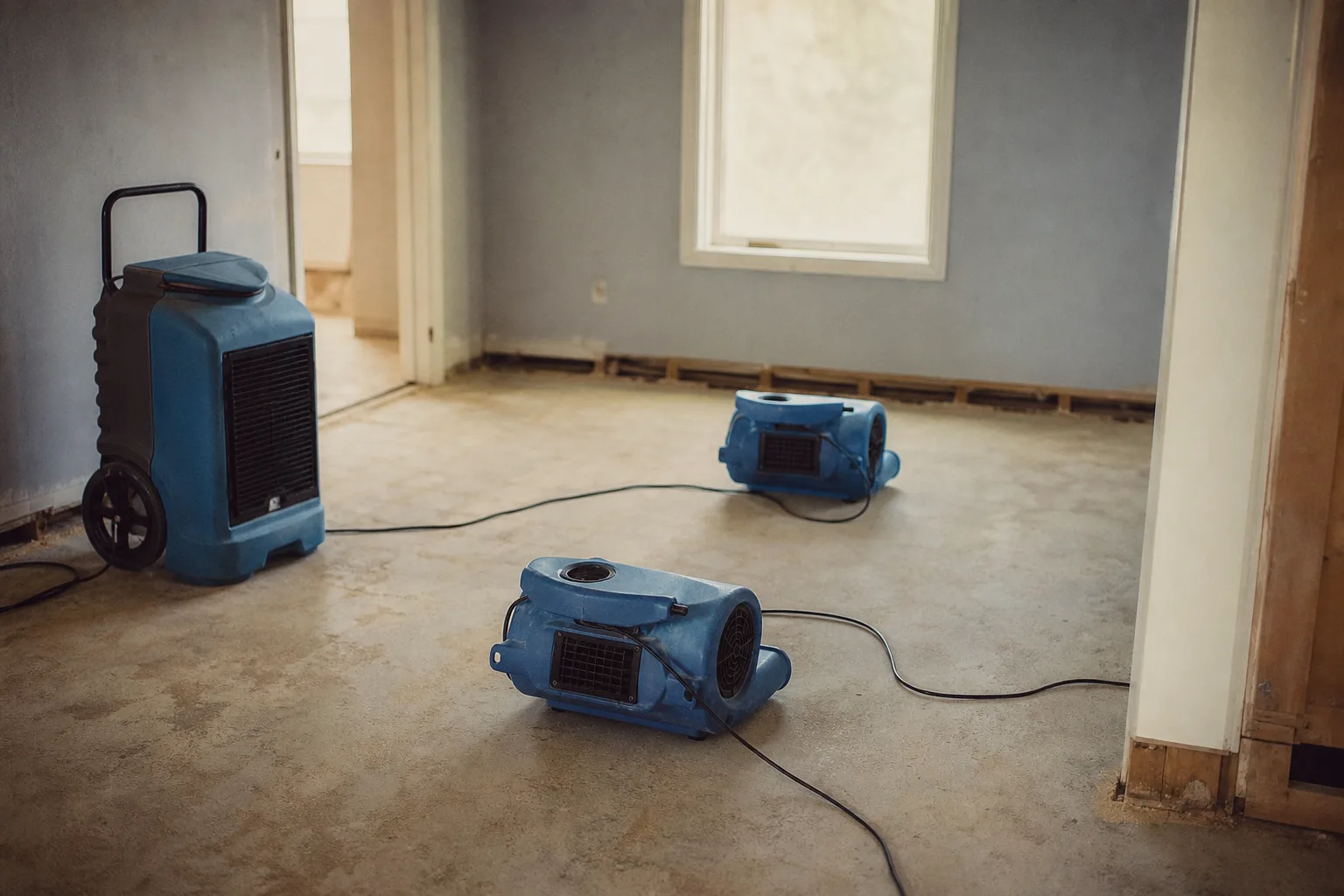
A pipe fails upstairs at some inconvenient hour and the immediate question everyone asks is how bad it is. That is the wrong question, or at least an unanswerable one, because the extent of the damage is not fixed at the moment the water stops. It is still being decided, and it goes on being decided for roughly two days, during which the difference between a room that dries and a room that gets gutted comes down to a short list of ordinary actions taken quickly by whoever happens to be standing there.
Stopping the Water Is Two Separate Jobs
The main shutoff comes first and everyone knows that in principle, though a surprising number of households have never located theirs and are trying to find it in the dark while a ceiling sags. The second job is electrical and gets forgotten under pressure. Water traveling through a floor structure reaches wiring, junction boxes, and the tops of receptacles on the level below, and the breakers serving the affected area need to come off before anybody wades in to start moving furniture, particularly where water is approaching outlets or a panel.
Once both are done, the useful next act is to open the building slightly rather than seal it. Interior doors on the wet side, closet doors, and cabinet doors under sinks all hold pockets of saturated air that will keep feeding moisture into materials for days. If the outside air is drier than the inside air, which in most seasons it is, a few windows help more than they hurt for the first hour or two, until mechanical drying equipment arrives and the building should be closed again.
Contents Come Out Before the Air Movers Go In
Standing water should be pushed or pumped out as fast as it can be, but the higher value work in the first hours is lifting everything the water can still reach. Furniture legs stain flooring within a few hours and the stain is permanent. Cardboard boxes wick water upward and destroy their contents well above the visible line. Rugs on hardwood are the single worst combination in the house, because the rug holds water directly against a material that cups and buckles quickly and is expensive to replace.
Anything porous and irreplaceable comes out first: documents, photographs, textiles, and upholstered pieces. Anything porous and replaceable can be triaged later. Hard goods can wait entirely. The rough rule that serves well under stress is that the more a thing absorbs and the less it can be bought again, the earlier it leaves the room, and the decision only gets harder once drying equipment is running and the floor is covered in hoses.
Photographs Taken Before Anything Is Touched Again
A claim is settled from evidence created during the event, not from a description given afterward, and the window for creating that evidence closes the moment mitigation starts. Wide shots of each affected room from the doorway, close shots of the source, the water line on walls and cabinet bases, the underside of anything that can be lifted, and the contents in place before they are moved. Timestamps come free with a phone and they matter later, because the sequence of what happened when is frequently the disputed part.
The same applies to anything removed from the building. Wet carpet, pad, and cut drywall carry information about how far the water traveled and what category it was, and once they are in a dumpster that information is gone. Photographing each load, keeping a sample of flooring or trim for matching, and noting the room each piece came from turns a pile of debris into a documented scope, which is what a settlement is calculated against.
The Call to the Insurer, and What Mitigation Means in the Policy
Reporting the loss early is worth doing even if the eventual decision is not to claim, because a policy generally requires prompt notice and because the same document imposes a duty on the homeowner to prevent further damage. That second duty is the part worth reading carefully, since it means reasonable emergency measures taken before an adjuster ever appears are usually recoverable, and it also means that waiting for permission before drying anything can itself be a breach of the obligation.
What the call should establish is narrow: the claim number, the deductible, whether the carrier expects a particular mitigation vendor, and what documentation they want for emergency work already underway. What it should not do is settle anything about cause or scope, because neither is known yet and an early guess offered helpfully on the phone has a way of hardening into a recorded position that has to be walked back later with evidence.
One Log, and Every Number Goes in It
By the end of the second day a household has accumulated a claim number, an adjuster’s name, two contractor estimates, a moisture reading somebody read aloud, a receipt for a rented pump, and four conversations nobody wrote down. A single notebook or a single document holding all of it, in date order, is worth more over the following months than any individual item in it, and starting one on day one costs nothing while reconstructing it in March is close to impossible.
Mold is the reason the clock in all of this is real rather than rhetorical. Guidance published by the Environmental Protection Agency on indoor moisture puts the window for drying wet materials at a day or two before growth becomes likely, which is why the actions worth taking are the ones available immediately rather than the ones that require a decision. The house that gets dried is usually not the one with the best insurance or the best contractor. It is the one where somebody moved the rug, opened the cabinets, and started the fans while the water was still warm.