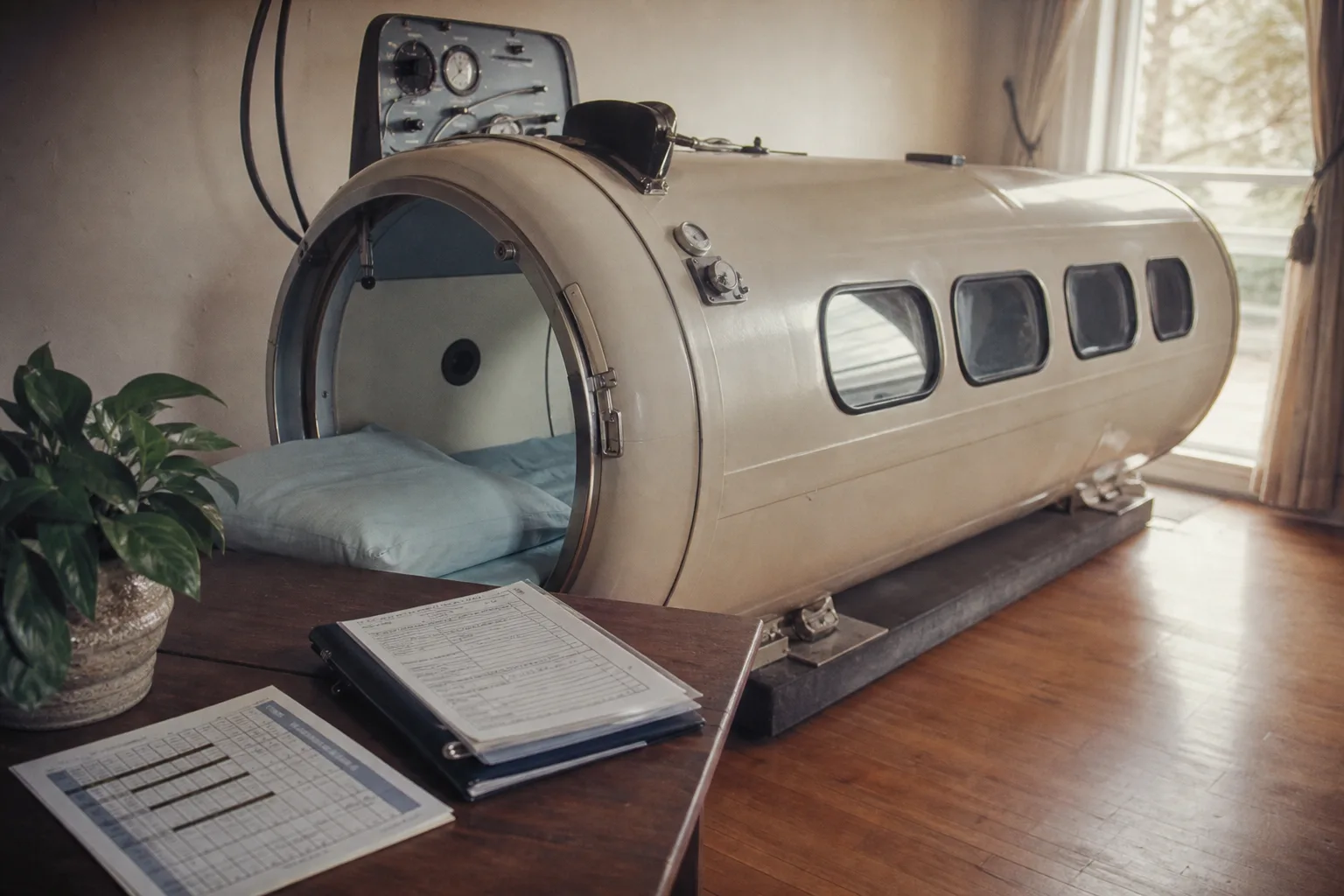
The number a clinic gives you over the phone is a per-session number, and the number that matters to your household is that figure multiplied by a course length nobody has told you yet. Ask for the course length first. A protocol of twenty sessions and a protocol of forty sessions are the same conversation with a total that differs by half, and the per-session quote will not move much between them.
This piece works through one narrow situation properly: an individual or a family paying for a multi-week course of hyperbaric oxygen therapy, largely or entirely out of pocket, at a private clinic. Not an institution with a contracting department. A person with a calendar, a car, and a limit.
Get the course written down before you price it
Ask the prescribing physician or the clinic's medical director for the protocol in writing: how many sessions, at what pressure, for how long each, and at what frequency. Daily on weekdays is common enough that it should be assumed unless you are told otherwise. That single sheet of paper turns a vague treatment plan into a schedule you can price, and it is the document every later step depends on.
Then ask the question that clinics answer honestly when asked directly: what happens if the course is extended? Some protocols are reassessed partway through, and the reassessment can add sessions. You want to know now whether extra sessions are priced at the block rate you agreed or at the higher walk-in rate. Get the answer in the same email thread as the quote.
The Food and Drug Administration is responsible for clearing hyperbaric chambers and the conditions they are cleared to treat, and a clinic should be able to tell you plainly which cleared indication your course falls under. That answer matters commercially as well as medically, because it largely determines whether an insurer will look at the claim at all.
The four documents that fix the price
Most of the variance in what households end up paying comes from paperwork that was never requested. Four items do the heavy lifting.
- A written self-pay quote covering the full course. Not a session rate. A total, with the number of sessions stated, and a line saying what is included: intake, physician oversight, any required exam, and the sessions themselves.
- A superbill. This is the itemized receipt with diagnosis and procedure codes on it. Even if the clinic does not bill insurance, a superbill lets you submit for out-of-network reimbursement yourself, and it is what a health savings account or flexible spending account administrator will want if a purchase is ever questioned.
- A letter of medical necessity. One page from the prescriber, naming the condition and the protocol. This is the document that unlocks HSA and FSA payment for anything an administrator considers borderline, and it is also the first attachment on any appeal.
- The prior authorization determination, in writing. If the clinic submitted one and it was denied, get the denial letter rather than a verbal summary. Denials name a reason, and the reason is often a fixable coding or documentation problem rather than a coverage decision.
What actually moves the total
Once the course length is fixed, the remaining variables are smaller individually but they compound across dozens of visits.
Session length and pressure. Longer sessions at higher pressure generally cost more and, in monoplace chambers, occupy a slot the clinic cannot resell. Clinics price accordingly.
Attendant requirements. A multiplace chamber with an inside attendant carries a staffing cost. A monoplace chamber may not. Ask which type you will be in.
Block prepayment. Paying for the whole course up front usually buys a discount. It also buys you exposure if you stop early, so ask what happens to unused sessions and get the refund terms in the quote, not in conversation.
Cancellation and no-show policy. With a daily schedule over several weeks, at least one conflict is close to certain. A policy that charges a full session for a same-day cancellation is a real cost line, not a formality.
Travel. Forty round trips is the item households consistently leave out. Mileage, tolls, parking, and, for anyone employed hourly, unpaid time away. Price it as its own row.
Where a home chamber changes the arithmetic
There is a crossover point, and for long courses it arrives sooner than people expect. Once the travel row and the session row are both on the page, compare them against the monthly cost of a hyperbaric chamber rental delivered and installed at the house, including the deposit, delivery, and any required training on operation.
The comparison is not purely financial. A home unit removes the daily commute and the cancellation risk, and it makes a longer or extended protocol far less disruptive to a working schedule. It also shifts responsibility for setup, safe operation, and supervision arrangements onto the household, which is why the rental provider's training and support terms belong in the comparison alongside the price. Ask what the rental includes, what the minimum term is, and what the extension rate looks like if the protocol runs longer than planned.
The tracking sheet worth twenty minutes
Build one spreadsheet before the first session and it will carry the whole course. Columns: date, session number, amount paid, payment method, mileage, and whether a receipt was issued. Add a second tab for documents, with the protocol letter, the quote, the letter of medical necessity, and every superbill.
Two payoffs. First, if you submit for out-of-network reimbursement, the insurer will want dates of service and amounts in exactly this form, and assembling it after the fact from card statements is miserable. Second, unreimbursed medical expenses may be deductible on a federal return once they exceed the applicable threshold, and mileage driven for medical care counts at the IRS medical rate. That is a real number for a forty-session course, and it exists only if someone wrote the dates down.
Keep the sheet current weekly rather than monthly. The clinic's records and yours should agree at every point, and disagreements are easiest to settle within a few days of the visit that caused them.
Price the course, not the session. Get the protocol, the quote, the superbill, and the necessity letter into one folder before you pay anything, and the rest of the decision, including whether the chamber comes to you, becomes straightforward arithmetic.