The spring maintenance checklist is one of the most reliably printed documents in American home ownership and one of the least reliably completed. It arrives with forty or fifty items, it gets stuck to a refrigerator in late March, four things get done on the first fine Saturday, and by the second weekend of April it has become a source of low grade guilt rather than a plan. The failure is so consistent that it is worth treating as a design problem in the list rather than as a character flaw in the household.
Why the Long List Fails Every Year
A long checklist fails for the same reason a crash diet does, which is that it demands a burst of effort against a schedule nobody actually has, and offers no way to partially succeed. Forty items sorted alphabetically or by room give no indication of which three would matter if only three got done, so the household works through them in the order they appear and runs out of weekends somewhere around item twelve. The items that did not get done are frequently the important ones, purely by accident of ordering.
The second failure is that the lists are written for every house at once. A list covering a slab foundation in Arizona and a stone basement in Vermont has to include both, which means most households are reading past items that do not apply to them while looking for the ones that do. Attention spent filtering is attention not spent doing, and by the time the reader reaches an item about their own roof they have already decided the document is not for them.
There is a third reason, and it is the one nobody says out loud. Most items on a long checklist are not maintenance at all but inspection, and inspection produces no visible result, which means a household that spends a Saturday doing it correctly finishes the day with a house that looks exactly the same. Tasks with a visible outcome, cleaning the deck or washing windows, get done first because they feel like progress. The list therefore selects against precisely the items it exists to deliver, and it does so every year without anybody noticing the mechanism.
The Short List, Ordered by What It Prevents
Six items cover the overwhelming majority of what spring maintenance is actually protecting, and they are worth stating in the order of what goes wrong if they are skipped. Clear the gutters and check that every downspout discharges well away from the foundation, because water against a foundation is the most expensive routine failure a house has. Walk the perimeter and look at the grade, since soil that has settled toward the house undoes the downspout work entirely.
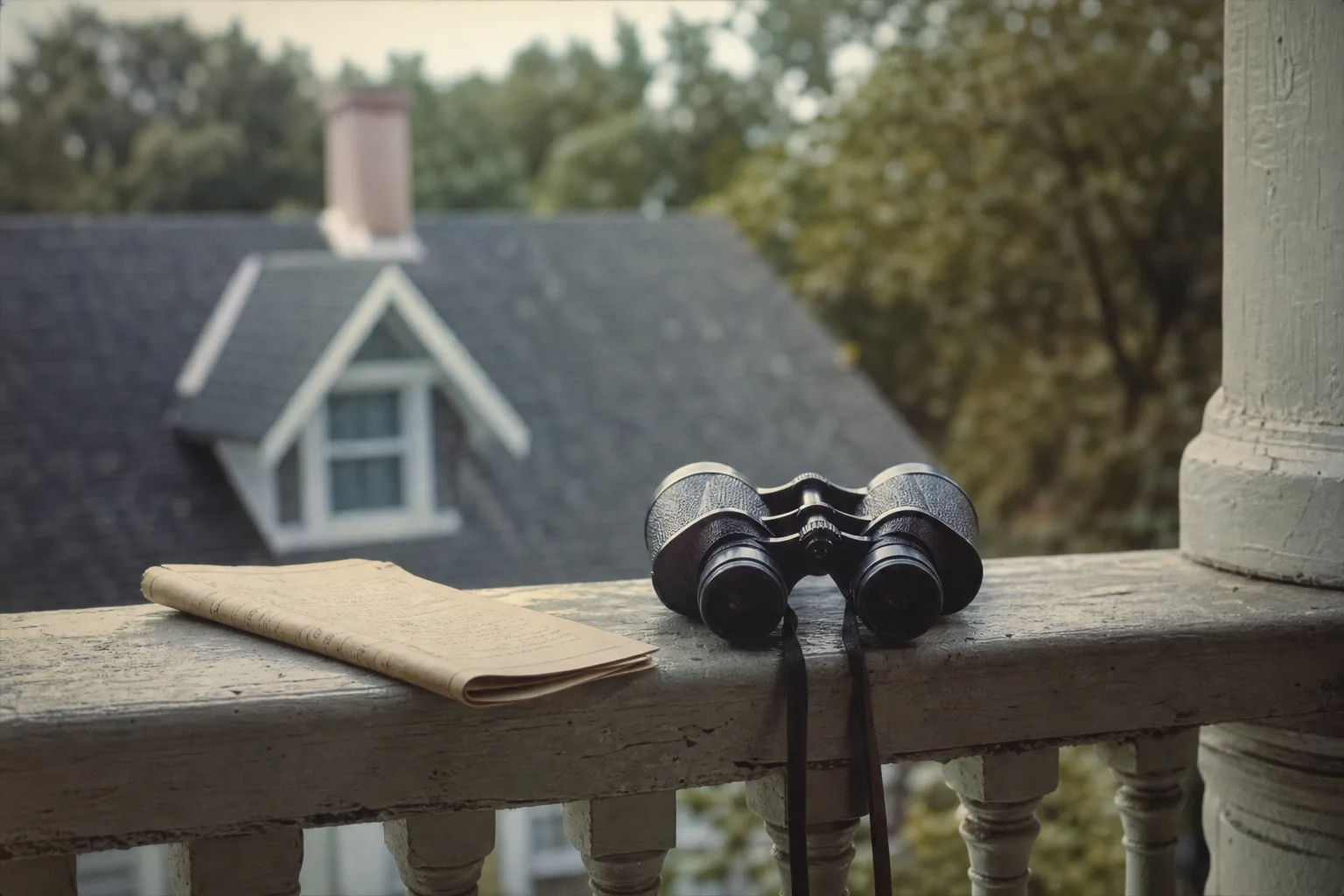
Third, look at the roof from the ground with binoculars, paying attention to the flashing at chimneys, valleys, and vents rather than to the field of shingles, because that is where leaks begin. Fourth, service the cooling equipment before the first hot week, when every technician in the region is booked. Fifth, test the sump pump if there is one, by pouring water into the pit rather than by looking at it. Sixth, check the caulking and seals where anything penetrates an exterior wall.
Each of the six is under an hour and none requires a tool most households lack, which is deliberate, since an item that needs a ladder rental or a scheduled visit will migrate to the following weekend and then to the following year. Two of them, the roof look and the perimeter walk, are pure observation and produce nothing except a note. Those are the two most likely to be skipped and the two that most often catch something early, which is the argument for putting them at the front of the list rather than the end.
What Got Cut, and Why That Is Not Neglect
The items that came off the list are not unimportant; they are either not seasonal, not consequential, or not annual. Cleaning the dryer vent matters a great deal and has nothing to do with spring, so it belongs on a different trigger entirely. Testing smoke alarms matters enormously and should happen far more often than once a year. Washing windows, touching up paint, and cleaning the deck all improve a house and none of them prevent a failure, which is the distinction the short list is built on.
Other items get cut because their failure is cheap and visible. A sticking window, a loose railing, and a slow outdoor faucet all announce themselves and can be handled whenever somebody has an hour. Putting them on a seasonal list adds length without adding protection, and length is the thing that kills the list. A household that reliably does six things every spring is in dramatically better shape than one that aspirationally plans forty and completes eleven.
The Autumn Half of the Same Short List
Six items in autumn mirror the spring six and complete the year. Clear the gutters again, because they fill after the leaves come down and a full gutter freezing is how ice dams start. Have the heating equipment serviced before the first cold week, for the same scheduling reason that applies to cooling in spring. Disconnect and drain exterior faucets and irrigation where freezing is a possibility, which prevents a burst pipe inside a wall.
Then check the seals on doors and windows, replace furnace filters, and confirm that combustion appliances have unobstructed venting and working carbon monoxide detection. Between the two lists that is twelve tasks a year, most of them under an hour, and the pairing has a practical benefit beyond the tasks themselves: doing the same walk around the building twice a year is what makes a change noticeable, and noticing a change early is worth more than any individual item on either list.
The pairing also solves the scheduling problem that kills annual tasks. Anything done once a year has no natural reminder attached to it and depends entirely on somebody remembering in the right month, whereas a task tied to a season announces itself: the first genuinely warm week and the first genuinely cold one are both impossible to miss. Households that anchor the two lists to those weeks rather than to calendar dates complete them far more reliably, because the trigger is the weather rather than a note nobody reads.
What Twelve Tasks a Year Are Actually Protecting
Nearly every item on both lists is about water going somewhere it should not, or about a mechanical system failing at the worst possible moment. Those two categories account for the great majority of unexpected household expense, and both are heavily biased toward early detection: a downspout redirected in April costs nothing, while the foundation work it prevents is a five figure project. Equipment serviced in the shoulder season costs the ordinary rate, while the same equipment failing in July costs an emergency rate and a week of discomfort.
Efficiency follows the same pattern almost incidentally. A cooling system with clean coils and a clean filter uses meaningfully less electricity than a neglected one, and the guidance published under the Energy Star program on seasonal equipment maintenance exists precisely because that difference is large enough to show up on a utility bill. The maintenance was worth doing for the reliability alone, and the running cost is a second return on the same afternoon.
Writing Down What You Saw, Which Is the Real Habit
The single upgrade that makes the short list compound is a page in a notebook or a note on a phone, dated, saying what was done and what was observed. Gutters clear, downspout at the northeast corner still discharging too close, hairline crack at the front step slightly wider than last spring, cooling serviced by whom and on what date. It takes five minutes and it converts twelve isolated chores into a record.
The record is what makes early detection possible, because almost nothing in a building fails suddenly and almost everything fails visibly if somebody is comparing this year against last. A crack that has not moved in four springs is a crack; the same crack a quarter inch wider is a question for somebody qualified to answer it. That comparison is impossible from memory and trivial from a notebook, and it is also the document a contractor asks for first when something eventually does need attention.
The forty item list was never wrong about the tasks. It was wrong about the household, which has perhaps three usable weekends between the end of the cold weather and the beginning of everything else that happens in spring. Six items done every year for a decade will protect a house far better than an ambitious list attempted once and abandoned, and the version that survives is the one worth writing down.