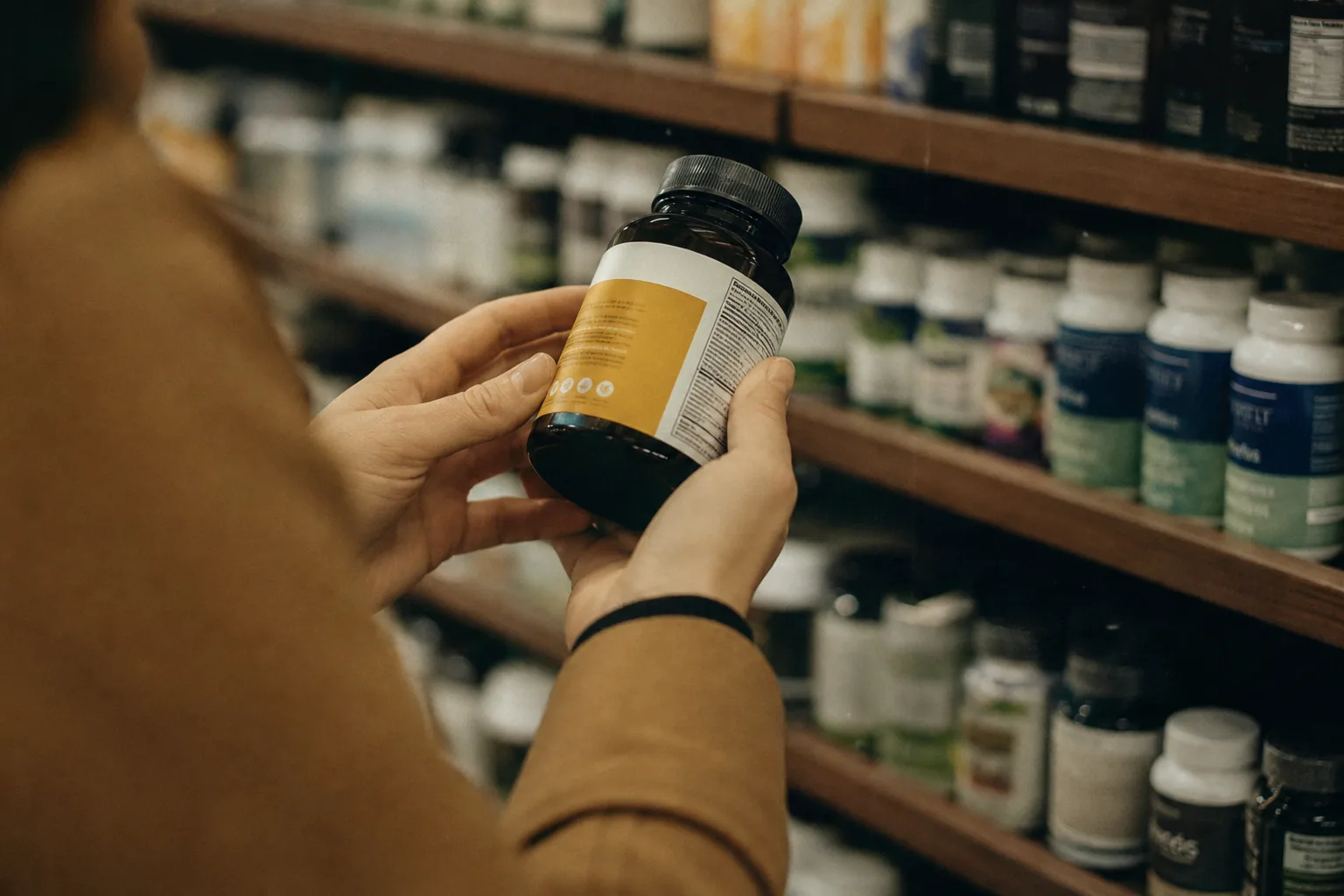
The words on the front of a package are not one category of statement. They are usually three or four, each governed by a different rule, and only some of them were reviewed by anyone before the box reached the shelf. The fastest way to sort them is to stop asking whether a claim is true and start asking who had to agree to it. On most packages the answer includes a party the shopper never thinks about: a private certifying body, paid by the manufacturer, whose published standard is what the seal on the front actually means.
What follows is a composite case, assembled from the way these checks typically run. A reader buying a daily supplement for an aging parent wanted to know whether the label was worth the premium over the store brand sitting next to it. The box carried a benefit statement, a nutrient statement and a round mark. She treated all three as one message. They were not.
Three claims, three rulebooks
The first line said the product supports heart health. That is a structure/function claim, and for a dietary supplement it requires no federal review of whether the product works. The manufacturer is responsible for having substantiation on file and must notify the agency that it is making the claim, but nobody checks the file before sale. The tell is printed on the box, usually in small type on the side panel: a statement that the claim has not been evaluated by the Food and Drug Administration and that the product is not intended to diagnose, treat, cure or prevent any disease. That disclaimer is not legal boilerplate to skip. It is the category marker.
The second line was a nutrient content claim, the kind that uses words like good source or high. Those words are defined in federal regulation against a specific percentage of a daily value. They are checkable arithmetic, and the Supplement Facts panel on the back is where you check them. A nutrient claim is narrow and reliable, but it says nothing about outcomes.
The third element was the mark. No sentence, no asterisk, just a logo. This is the one that carried the most weight with the buyer and the one she knew least about.
The party nobody reads: the certifier
A seal is a contract between the manufacturer and a certifying organization, not between the manufacturer and you. The organization writes a standard, audits against it, and licenses its logo to products that pass. Its revenue comes from the companies it certifies. That arrangement is not disqualifying. Accredited certifiers operate under their own conflict-of-interest rules and, in the case of organic certification, under accreditation from the federal organic program. But it does mean the only way to know what the mark promises is to read the certifier's standard, which is almost always published.
Standards differ sharply in what they test. Some verification programs for supplements confirm identity and potency: that the ingredient named on the label is present in the amount stated, that the product dissolves, that it is screened for heavy metals and other contaminants, and that it was made under good manufacturing practices. That is a meaningful guarantee about contents. It is not a finding that the product does anything for your heart. Other marks address sourcing, allergen thresholds, or production method and say nothing at all about potency.
Most certifiers also run a public directory. You can search the brand and the specific product and see whether that exact item, in that exact form, is listed. Seals get applied across a product line when only one item was certified. The directory is where that falls apart, and it takes under a minute.
What the eleven-minute check looked like
- Find the disclaimer. Its presence confirmed the heart claim was a structure/function claim, not an authorized health claim reviewed for scientific agreement.
- Match the front panel to the back panel. The nutrient claim held up against the amount per serving listed in Supplement Facts.
- Identify the certifier by name. The logo's wordmark gave the organization; a search gave the standard.
- Read what the standard covers. Identity, potency, contaminant screening and manufacturing practice. No efficacy component.
- Look up the product in the certifier's directory. The specific SKU was listed, in the dose purchased.
She bought the product. The reasoning changed, though. She was no longer paying for a heart benefit that no agency had assessed. She was paying for third-party confirmation that the capsule contained what the panel said it contained, screened for contaminants, in a category where that is the live risk. That is a narrower promise and a defensible one.
Where the protections sit
Labeling on foods and supplements falls under the Food and Drug Administration, which oversees what may appear on a package and in which form. Advertising, including the same claims repeated in a television spot or on a retailer's website, falls to the Federal Trade Commission. Both accept complaints from the public. The practical protection, though, is earlier than either: the categories are printed on the box, and they sort themselves once you know that a disclaimer, a defined nutrient term and a licensed seal are three separate instruments with three separate backers.
Front panels are written to be read in two seconds. The rulebooks behind them are written to be read, too, and they are open. Knowing which of the three you are looking at turns a vague impression of quality into a specific claim you can confirm before you pay for it.