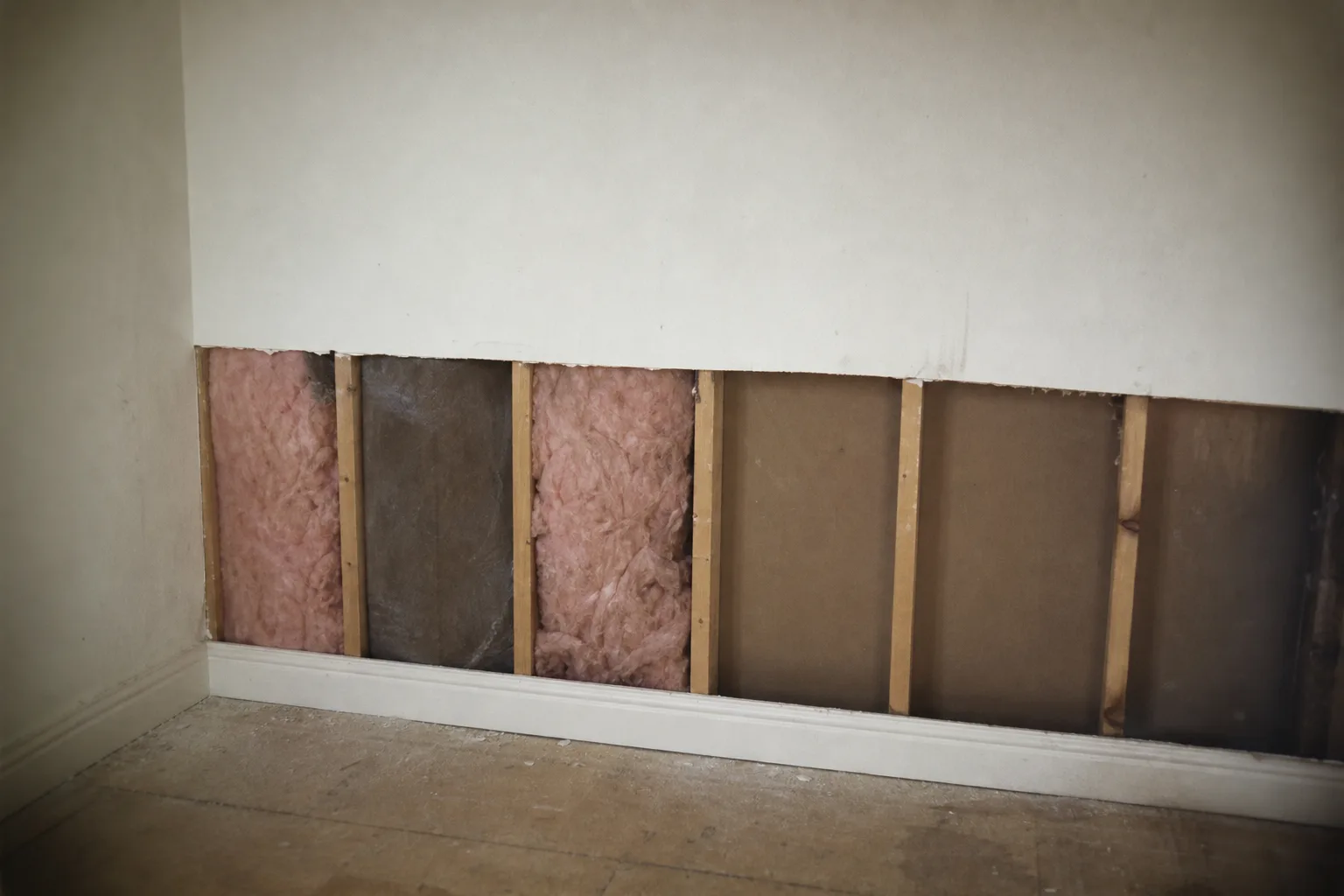
When people picture water damage they picture the water: a volume of it, a level on a wall, a floor that has to come up. What restoration professionals see instead is a classification, made within the first hours, that determines almost everything that happens afterward. The same six inches of water across the same room produces a three day drying job or a full demolition depending on where it came from and how long it sat, and the homeowner who understands that classification can follow every decision made about their house.
The Three Categories and What Separates Them
Category one is water from a sanitary source: a supply line, a water heater, a burst pipe carrying potable water, rainwater arriving through a roof opening. It poses no immediate health risk, and materials that absorbed it can generally be dried in place rather than removed. Category two carries significant contamination and some potential to cause illness, which covers discharge from a washing machine or dishwasher, water from a toilet overflow containing no solids, and water that has passed through a building assembly and picked up whatever was in it.
The boundary between the first two is where most disagreements happen, because a great many losses start as one and are assessed as the other. Water that left a clean supply line and then traveled twenty feet through an old subfloor is no longer what it was when it started, and a technician who assigns category two to it is not inflating the scope but describing what the water picked up on the way. The source is only half the classification; the path is the other half.
Category three is grossly contaminated and treated as containing pathogens. Sewage, any water from a sewer backup, rising surface water from outside the building, and anything that has passed through a septic system fall here without argument. The practical consequence of the third category is that porous materials that absorbed it are not dried, they are removed, and the boundary of that removal extends beyond the visible line by a stated margin because contamination travels further than water is visible.
Categories Move in One Direction Only
The classification is not fixed at the moment of the loss, and this is the single most consequential fact in the whole subject. Clean water sitting in a warm building becomes category two within a day or two as it feeds bacterial growth and dissolves whatever it is resting on, and category two left long enough becomes category three. The progression only runs downward, which means every hour between the event and the response narrows the range of outcomes available.
Temperature accelerates it, and so does anything organic in the path of the water. A supply line failure in an unheated basement in February behaves quite differently from the same failure in a carpeted living room in August, and a technician assessing the loss is asking about elapsed time as carefully as about the source. This is why the answer to a burst pipe is fans within hours rather than an appointment on Thursday, and it is the entire reason emergency mitigation exists as a separate stage from repair.
What Each Category Does to the Materials
Under category one, most assemblies can be saved. Drywall dries in place if air movement reaches both faces, insulation is a judgment call depending on type, carpet is usually salvageable with the pad replaced, and solid hardwood can often be dried with specialized mats rather than lifted. Under category two the calculus shifts toward removal for anything that holds water in a way that cannot be cleaned, and carpet pad, fiberglass insulation, and particleboard all come out.
Under category three nothing porous stays. Drywall is cut back well above the water line, insulation is removed entirely, carpet and pad are discarded together, and cabinetry with a particleboard core comes out even where the surface looks untouched. Structural framing and other non porous surfaces are cleaned and treated rather than replaced. The scope looks brutal to a homeowner watching it happen, and it is the standard response, because material that has absorbed contaminated water cannot be verified clean afterward.
Contents Sort by Whether They Absorb
The same logic runs through everything in the room, sorted by porosity rather than by value. Hard, non porous objects can be cleaned and returned under any category. Semi porous items such as solid wood furniture are usually restorable under categories one and two with appropriate cleaning. Porous items including upholstery, mattresses, paper, and most textiles are restorable under category one, doubtful under category two, and discarded under category three regardless of what they cost.
Documents and photographs are the exception worth knowing about, because specialist freeze drying can recover material that looks unsalvageable to anybody looking at it, and the window for arranging that is short. Anything irreplaceable that got wet should be bagged and put in a freezer rather than left to dry on a counter, which stops the deterioration where it is and buys weeks to find somebody who does this work. It is the single instruction that most reliably saves things a household would otherwise have lost, and almost nobody is told it in the first hours.
Electronics and appliances sit outside the porosity rule and follow their own. Anything that was energized when it got wet is a safety question before it is a salvage question, and anything that was not should stay unplugged until somebody qualified has looked at it, because powering a wet device is how a recoverable item becomes a total loss and occasionally a fire. Corrosion continues quietly for weeks after the surface looks dry, so a television that worked on day three is not evidence that it will work in November, and it belongs on the claim either way.
Mold, and the Questions Worth Asking on Day One
Every category can produce mold given enough time, and the timeline is short enough to be the organizing fact of the whole response. Guidance from the Environmental Protection Agency on moisture in buildings puts the window for drying wet materials at roughly a day or two before growth becomes likely, which is why the categories matter most in exactly the period when nobody has decided anything yet and the household is still finding the shutoff.
Three questions put to whoever arrives will tell a homeowner most of what they need. What category is this being treated as, and what did you base that on. What is the elapsed time you are working from, since that is what moves the classification. And what specifically is coming out of the room as a result. The answers should be consistent with each other, they should be written on the assessment, and a scope that removes far more than the stated category requires deserves the same question as one that removes far less.