A drunk driving arrest starts two separate proceedings, and most people walk into their first meeting with an attorney prepared for only one of them. The criminal case is the one with a courtroom, a judge, and a date printed on the paper you were handed in the parking lot. The other one belongs to the state licensing agency, runs on its own schedule, and in many cases has a deadline that expires well before the first court appearance. That second case is the party in the transaction almost nobody accounts for, and it is the reason a first consultation is either useful or half wasted.
Take a narrow, common situation: a Seattle traffic stop late on a Friday, a night in booking, release Saturday morning with a manila envelope of forms, a phone at four percent, and a car somewhere in an impound lot in Georgetown. Monday you start calling attorneys. Wednesday you have an appointment. What you do with Monday through Wednesday determines whether that appointment produces a plan or a second appointment.
Sort the envelope before you sort anything else
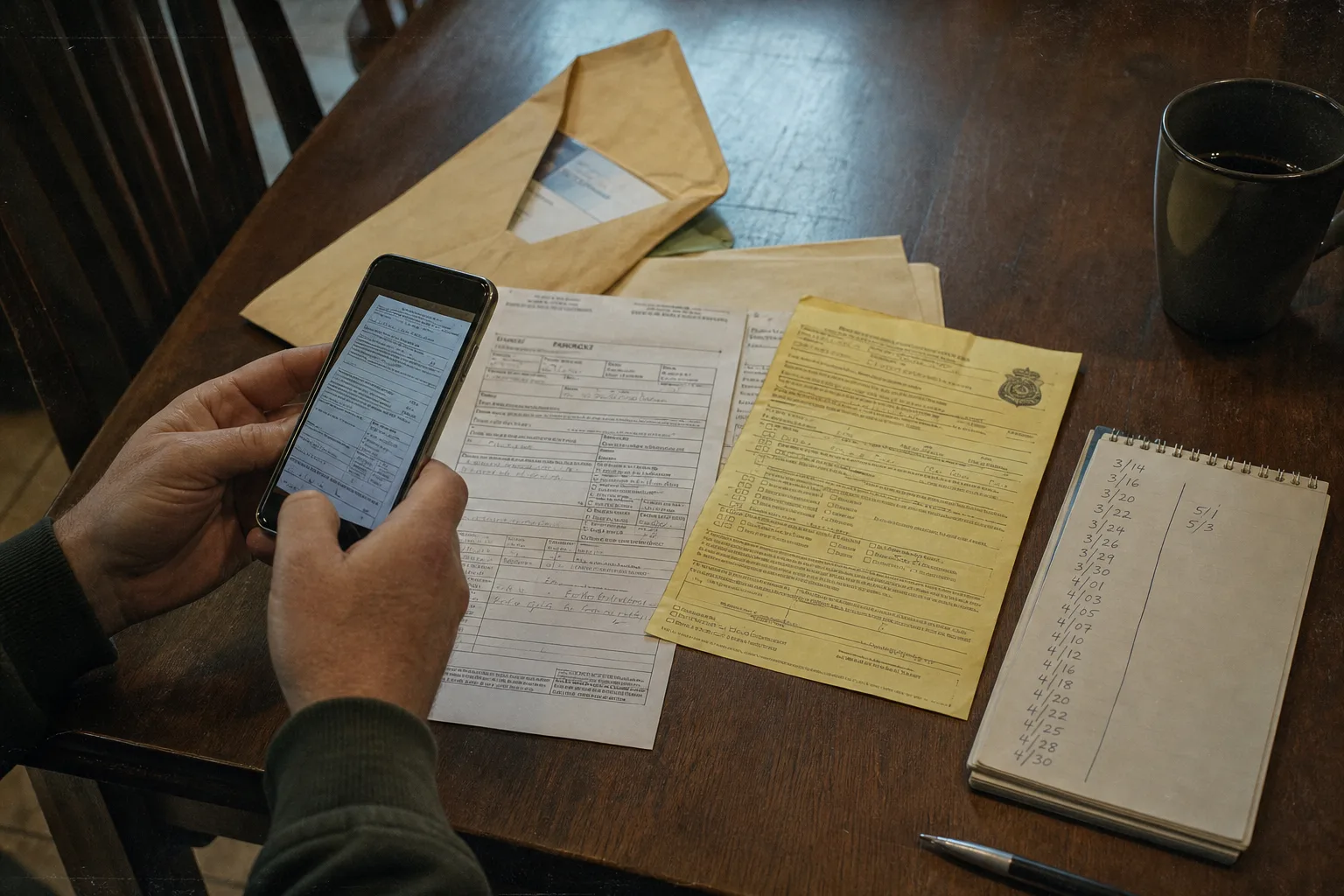
The paperwork you were released with is not one document. It is usually four or five, issued by different offices for different purposes, and they are easy to mistake for duplicates because they repeat your name and the same date.
- The citation or criminal complaint. This names the charge and a court, and often a first hearing date. It tells the attorney which prosecutor's office and which courthouse you are in, which matters: municipal court and county district court run differently.
- The notice from the licensing agency. This is the sheet that says your driving privilege is subject to administrative suspension, and it usually contains a short window, measured in days rather than months, to request a hearing. It may double as a temporary permit with an expiration date on it.
- The breath test result or the blood draw notice. One means a machine at the station produced a number. The other means a sample went to a state lab and no result exists yet, which changes the shape of the next two months entirely.
- The impound and release notice. Its own clock, its own storage fee per day, its own tow operator with no interest in your court date.
- Bail or release conditions. Sometimes a no-drive condition, sometimes an ignition interlock requirement, sometimes both.
Photograph every page, front and back, including anything that looks like a receipt. Put the images in one folder with a name you will find again. Then write down the expiration or response date from each document on a single sheet, in order, earliest first. That sheet is the most valuable thing you can bring to a first meeting, and almost nobody brings it.
The party nobody names in the first phone call
People describe a DUI as a fight with a prosecutor. In practical terms, the licensing agency acts first and independently. It is not waiting for a verdict, it does not need one, and its process is administrative rather than criminal. An acquittal months later does not automatically undo an administrative suspension that took effect because a hearing was never requested inside the window.
This is where an unprepared consultation loses money. If you spend the hour on questions about trial odds and probation while the licensing deadline runs, the attorney's first task becomes triage instead of strategy. If instead you arrive knowing the date on that notice, whether a hearing request has a fee, and whether you have already submitted anything, the hour goes to substance: whether to contest the suspension, whether an interlock is worth installing early, whether your commute survives the next ninety days. When you call around, ask each office directly how they handle the licensing side, because a competent seattle dui attorney will treat that deadline as the live one and the court date as the slower track.
There is a second overlooked party worth naming: the machine and the people who maintain it. Breath testing instruments have calibration records, maintenance logs, and certified operators. Field sobriety testing follows a standardized battery whose protocols come out of the federal impaired driving program that the National Highway Traffic Safety Administration is responsible for overseeing. None of that is your job to evaluate. It is your job to know that records exist and that requests for them have timelines, which is another reason the first meeting should not be spent recovering basic facts.
What to reconstruct while you still remember it
Memory of the stop degrades fast, and it degrades in a specific direction: you keep the emotional parts and lose the sequence. Write the timeline within seventy-two hours, in plain sentences, with clock times wherever you have them. Not a defense. Just a record.
- Where you were before driving, what you consumed, and over what span of time. Include food.
- The route and where the stop happened. Cross streets, not neighborhoods.
- What the officer said first, and what you said back.
- Which tests were offered, which you performed, what the surface and lighting were like, and whether you told anyone about an injury, an inner ear problem, or a medication.
- Whether a portable test happened roadside and a second one at the station.
- Whether you asked to speak to an attorney, and when, and what happened next.
Pull the supporting records while you are at it. Card statements and app receipts establish timing better than recollection does. A rideshare cancellation, a bar tab timestamp, a text thread from that evening, a work schedule showing when your shift ended: all of it is ordinary and all of it is easier to gather now than in March. If you have a medical condition or a prescription that bears on balance, speech, or breath testing, bring the name of the prescriber and the medication rather than a general statement that you have a bad knee.
Turning the hour into a plan you can act on
Bring the deadline sheet, the document folder, the timeline, and one page of questions. Ask what happens between now and the first hearing, in order, with dates. Ask what the licensing hearing costs, who attends, and what a realistic outcome looks like. Ask what the fee structure covers: whether the administrative hearing is inside the quoted fee or billed separately, whether motions are extra, and what a trial would add. Ask what you should not do, because the answer usually includes driving under a condition you did not realize applied to you.
Then ask the question that changes the most: what do you need from me, and by when. Attorneys work faster with a client who produces documents on request. A first meeting that ends with a short list of tasks assigned to each side, with dates attached, has done its job.
One narrow situation, two clocks, and only one of them printed in a place you would think to look. The envelope in your kitchen already contains everything needed to walk in prepared, which means the difference between a productive consultation and an expensive introduction is a couple of hours of sorting on a Sunday afternoon.