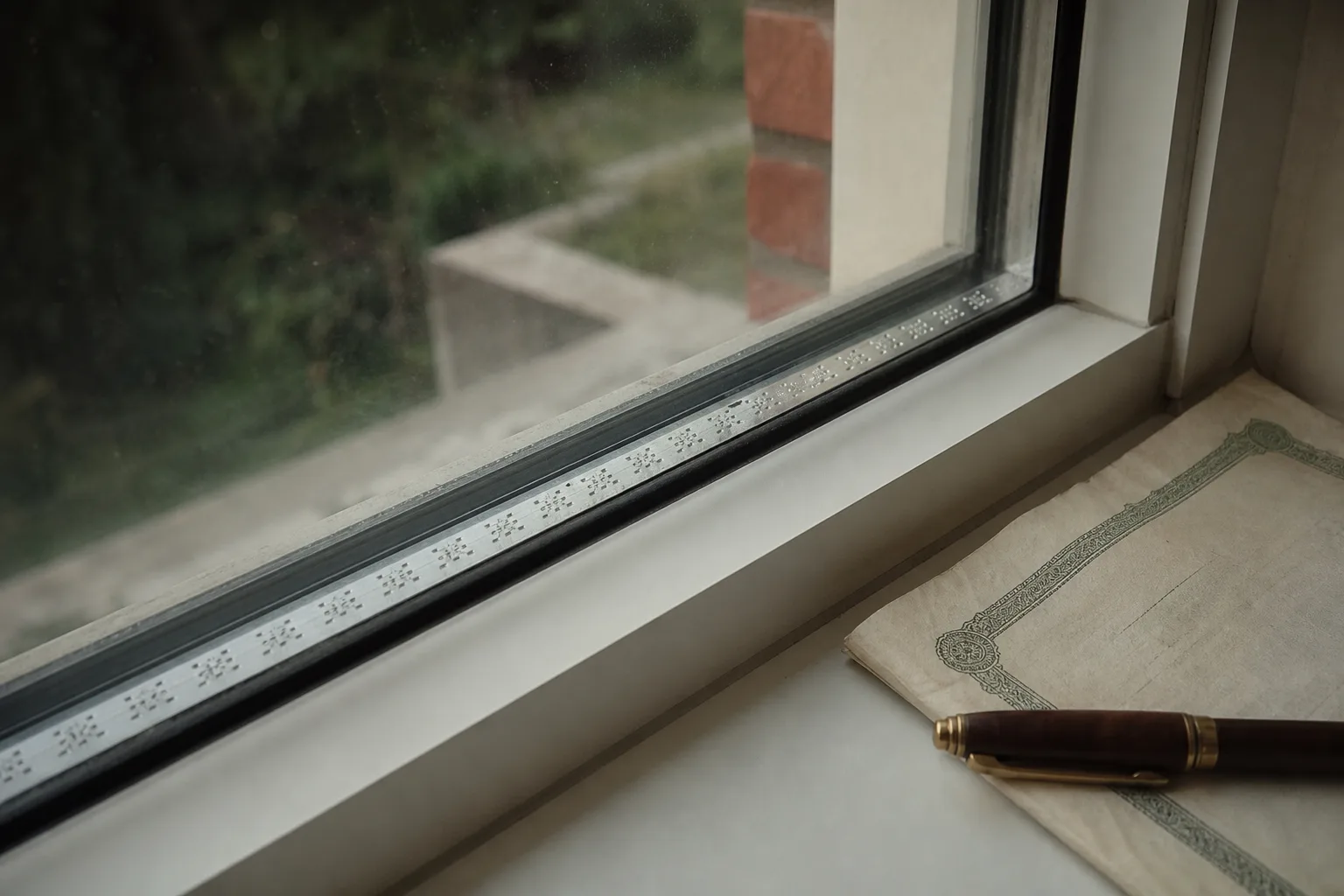
A window guarantee is really two or three separate promises stapled together, and they fail at different speeds. The glass unit is covered by the manufacturer, who is usually still trading in ten years. The installation is covered by the company that did the work, which may not be. If the piece you need most is the second one, the only way to make it survive is to have a third party standing behind it, and that costs money you pay up front.
First-time buyers almost never see this distinction at quote stage, because every brochure says "lifetime warranty" and none of them say whose life. Here is how the options compare, what they cost, and what makes one quote's coverage worth more than another's identical-sounding one.
The three promises inside one guarantee
Separate them before you compare anything else.
The product warranty comes from whoever made the window. It covers seal failure, glass defects, hardware, sometimes finish. It is written by a manufacturer with a national footprint and is the most durable piece of the package, because it does not depend on your installer existing. It usually covers parts generously and labor barely at all, often for a short initial window. That gap matters: a failed insulated glass unit is a cheap part and an expensive visit.
The workmanship warranty comes from the installer. It covers leaks at the perimeter, out-of-square openings, failed caulk joints, trim, flashing, interior damage from a bad seal. This is the promise that actually gets called on in years two through eight, and it is the one that evaporates when a company dissolves or sells its book of business.
The backing is whatever makes the workmanship promise enforceable against someone other than the installer. That might be an insurance policy, a third-party warranty administrator, a surety bond, or a state recovery fund. Only one of those is something you buy at the point of sale.
Comparing the four ways coverage survives a closure
| Option | What it covers | Typical cost shape | Weak point |
|---|---|---|---|
| Transferable manufacturer warranty | Glass, frame, hardware defects | Built into the product price; a transfer fee at resale is common | Labor coverage ends early; does not touch installation |
| Third-party backed workmanship warranty | Installation defects if the installer cannot perform | Priced as a small percentage of contract value or a flat per-job fee, scaled to term length | Only as good as the exclusions and the claim deadline |
| Surety bond on a licensed contractor | A capped pool for claims against that license | No direct cost to you; the contractor carries it | Shared with every other claimant; often small relative to a full window package |
| State licensing board recovery fund | Proven losses from a licensed contractor | Free to claim; sometimes a filing step | Per-claim caps, documentation burden, long timelines |
Most people end up with the first and third by default and never knowingly choose the second. That is the one worth deciding on deliberately, because it is the only one you can buy that pays for labor on a company that no longer exists.
What the backed guarantee actually costs, and what moves the number
Third-party warranty backing on a residential window job is priced off the contract value, not off the number of openings. Expect it to be quoted either as a percentage of the job total or as a flat fee per job within a value band. Either way the premium is a line you can ask to see broken out, and a reputable installer will show it rather than bury it.
Four things move the price:
- Term length. Coverage sold for ten years costs meaningfully more than five, and the jump is not linear, because the back half of a term is where claims cluster.
- Scope. A policy that covers only the installer's defective workmanship is cheaper than one that also covers consequential damage, like drywall and flooring ruined by a perimeter leak. Read which one you are being sold.
- Job value and complexity. Whole-house replacement with structural openings, bays, or anything involving the wall assembly carries a higher rate than a straight like-for-like swap of six double-hungs.
- The installer's own record. Administrators underwrite the contractor, not just the job. A company with years of clean history and audited installs gets a lower rate and passes less through to you. A new entrant may not be able to offer backing at all.
Against that, price the alternative. A single perimeter leak discovered in year six, with no one to call, means a diagnostic visit, removal and reset of one or two units, and interior repair. Against that figure, the premium on a mid-sized job tends to look modest. The Federal Trade Commission oversees how consumer product warranties are written and disclosed, which is why the document you are handed has to state its terms in plain language. Make it earn that.
If the installer is already gone
Plenty of people read this after the fact, having found a dissolved company and a warranty certificate with a dead phone number. There is usually more left than it looks.
Start with the glass. Pull the manufacturer's etching from the spacer bar or the frame label and call the manufacturer directly. Product warranties routinely run to the homeowner, not the contractor, and many survive the installer's closure untouched. Seal failure claims in particular are often honored on the part regardless of who installed it.
Next, check the license. If the company was licensed and bonded, the bond may still be claimable for a period after closure, and your state's licensing board can tell you the window. If a recovery fund exists in your state, the same board administers it. Both routes want the contract, the payment records, the dated photographs, and a written estimate of the remedy, so gather those before you file rather than after.
Then check how you paid. A deposit charged to a credit card within the dispute period, or financed through a lender tied to the contractor, can open a route the cash payer does not have. Finally, ask whether the business was bought rather than closed. Window companies are frequently acquired, and the buyer sometimes assumes outstanding warranty obligations as part of the deal.
What to ask before you sign the next one
Ask who pays the labor in year seven, and get the answer in the document rather than the conversation. Ask whether the backing is an insurance policy or a promise from the same company, which are not the same thing wearing different words. Ask for the administrator's name and look it up yourself. Ask what the claim deadline is after you notice a problem, because short notice periods are the most common reason a valid claim gets declined.
And ask for the premium as a separate line. A guarantee you can see the price of is a guarantee someone has actually underwritten.