The quote to install a landscape is a single number you can stare at. The cost to keep it is a schedule, and it runs every year whether or not you planned for it. Commercial grounds contracts make that visible in a way a residential install estimate never does: they price labor visits, water, materials and a separate line for tree work, because those four behave differently and fail differently. Borrowing that structure is the fastest way to find out what your yard actually costs.
Price the visits, not the plants
A property manager running a few dozen sites does not think in square feet of lawn. They think in crew hours per visit, visits per season, and how much of the site is mow-and-blow versus hand work. That is the honest unit of cost, because labor is the dominant share of nearly every maintenance budget and everything else is noise around it.
Translate your own yard the same way. Count the visits something needs: mowing from spring through first frost, bed edging and mulch once or twice, shrub pruning once or twice, leaf cleanup in fall, cutbacks in late winter. Then ask how long each takes, either from a contractor's estimate or from your own weekends. A design with twelve species in six beds is not expensive because of the plants. It is expensive because it requires somebody with hand tools standing in it for several hours, several times a year, for as long as you own the house.
This is also why the cheapest line item to change is the plan, not the provider. Swapping a fussy border for a mass planting of one tough species does not save much on install. It can take hours out of every single maintenance visit after that.
The recurring costs that are not labor
Larger operators separate consumables from service because consumables track with weather and utility rates, not with how often a truck shows up. For a residential yard the recurring non-labor costs are short and predictable in kind, if not in amount:
- Irrigation water. Usually the largest non-labor cost on an irrigated property, and the one most sensitive to how the controller is set. The Environmental Protection Agency oversees the WaterSense program covering irrigation efficiency, and a controller that responds to weather rather than a fixed clock is the single change that most reliably moves this number.
- Mulch. An annual or biennial refresh, priced by the cubic yard plus the labor to spread it. Bed area drives it, not plant count.
- Fertilizer and soil amendments. Modest per application; it adds up on large turf areas.
- Annual color. The most expensive thing per square foot in most commercial contracts, because it is bought and installed two to four times a year. Homeowners rarely account for this and then wonder where the garden center money went.
- Irrigation repairs and backflow testing. Heads get hit by mowers. Valves fail. Many jurisdictions require an annual backflow test on an irrigation connection.
None of these is dramatic alone. Together they are a real second budget sitting underneath the service agreement, and they are why a flat per-visit price from a contractor often excludes them in the fine print.
Trees are a capital line, not a maintenance line
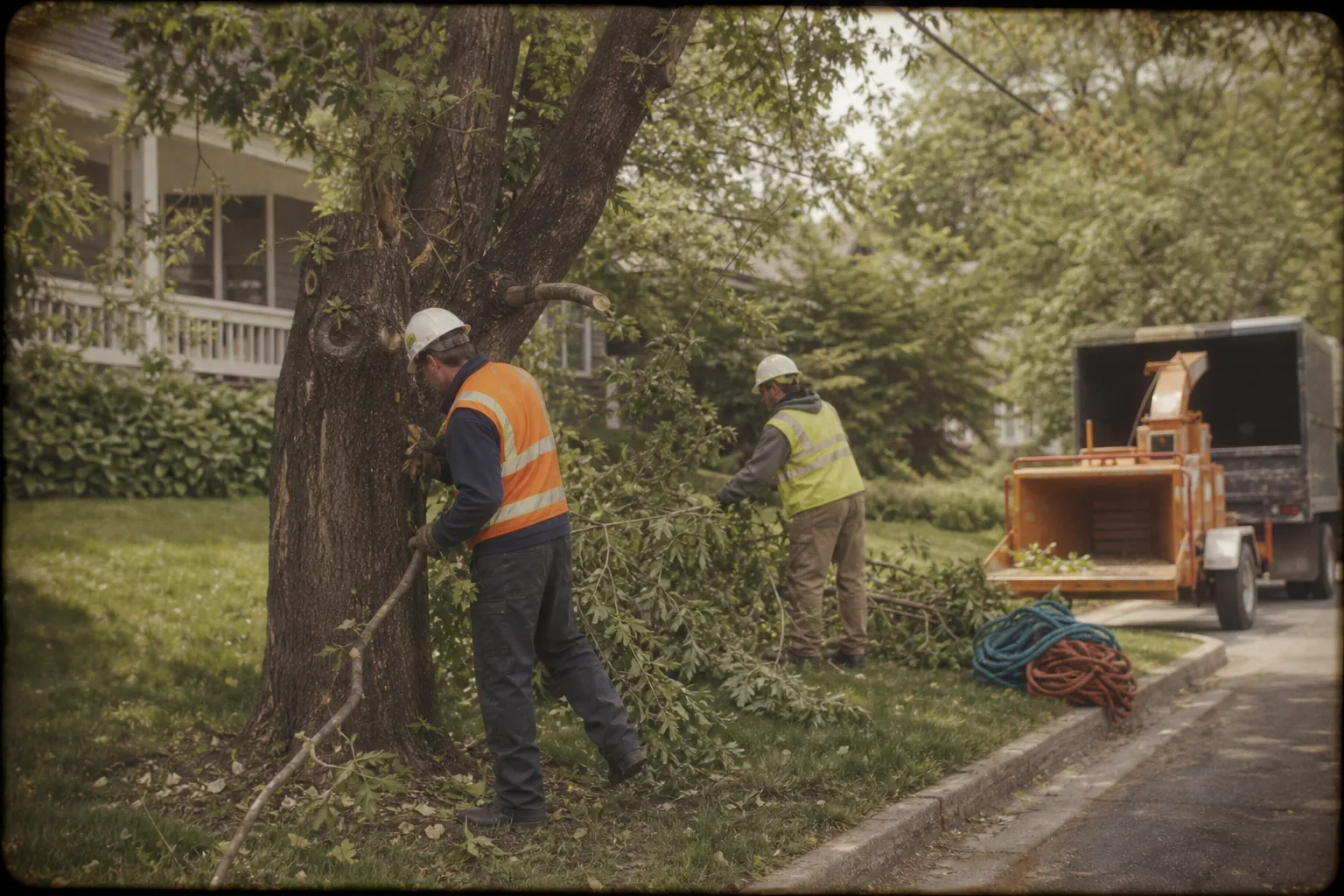
Here is where the commercial model is most useful to copy, and where homeowners are most often caught out. Grounds contracts treat trees separately from routine maintenance because tree work is infrequent, expensive per event, and carries liability that mowing does not. A managed property budgets structural pruning on a multi-year cycle and holds a reserve for removals.
A young tree needs formative pruning in its first decade, which is cheap and prevents expensive problems. A mature tree needs inspection and selective pruning every few years. A declining or badly placed tree eventually needs to come out, and that single event can cost more than an entire season of routine yard maintenance. Cost drivers for a removal are consistent: height and trunk diameter, proximity to a structure or power line, whether equipment can reach the trunk, whether the wood can be dropped or has to be rigged down in sections, and whether stump grinding and debris haul are included or quoted separately.
Because the work is high-consequence, the screening is different too. For tree removal services, ask for a certificate of insurance showing general liability and workers' compensation, sent directly by the insurer or agent rather than handed to you as a photocopy, and confirm the crew works to recognized arboricultural pruning standards rather than topping. Get the scope in writing: what comes down, what stays, stump treatment, and who hauls the wood.
Set aside something annually against it. A property manager calls that a reserve. A homeowner can call it the tree envelope. Either way, the removal that arrives after a storm is far easier to absorb when it was already a known future expense.
Build the number before you build the garden
Write a one-page annual sheet. Routine visits and what each costs or takes in hours. Water, mulch, fertilizer, annuals. An irrigation repair allowance. A tree line funded every year and spent rarely. Add ten to fifteen percent for the unplanned, because something storms through or dies.
Now compare that annual figure against the design you are considering. If upkeep looks heavier than you want to carry, change the design while it is still on paper: shrink the irrigated turf, consolidate beds, pick species sized for the space they will occupy at maturity, and keep large trees away from the roofline and the service drop. Each of those decisions costs nothing to make now and pays every year afterward.
A garden you can afford to keep is a different object from a garden you can afford to install. The property managers who run hundreds of sites figured that out because the install bill crosses their desk once and the maintenance bill crosses it every month. The arithmetic is the same on a quarter acre.