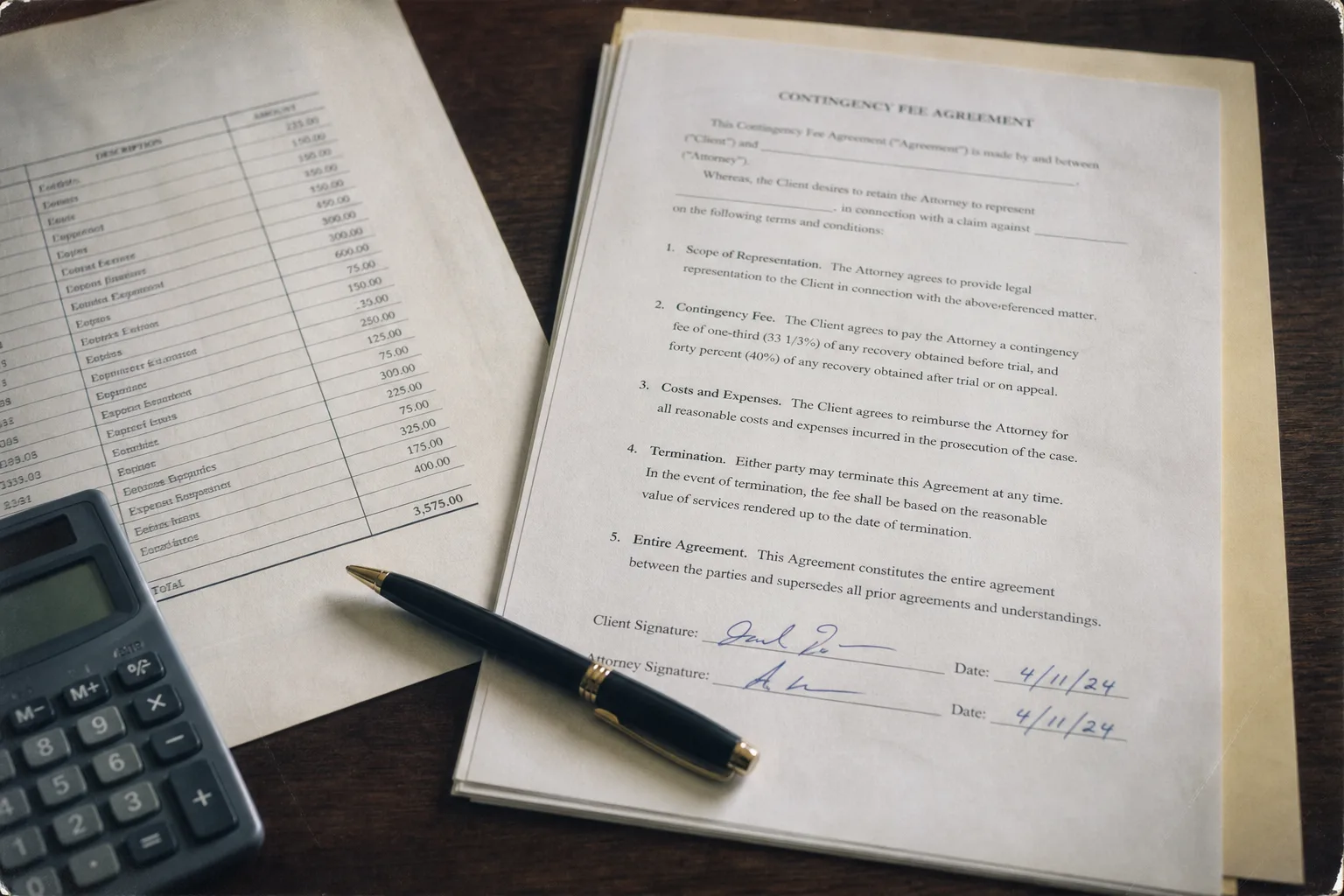
The percentage on the first page of a contingency agreement is the least informative number in the document. What decides the size of your check is the base that percentage is applied to, the point in the sequence where case costs come out, and who is standing in line with a lien. Two firms can both quote a third and hand back checks that differ by thousands of dollars on identical settlements. That difference lives in three or four sentences buried past the signature line, and it is worth reading them before you sign rather than after.
This matters most in cases where the recovery is not enormous and the costs are real: a claim against a national retailer over an assault in a store, a premises case, anything where investigators, records, and experts get paid along the way. The fee arithmetic is where a competent handling of the case and a barely adequate one separate, and it shows up in the week-to-week conduct of the file long before it shows up on the settlement statement.
Gross recovery or net recovery, and why the order changes the number
Almost every contingency agreement says the fee is a percentage of the recovery. The question is whether that percentage is computed before or after case costs are subtracted.
If the fee comes off the gross, the firm takes its share of the whole settlement and then costs are deducted from what is left, which means you absorb the full cost of the case out of your portion. If the fee comes off the net, costs are subtracted first and the percentage is applied to the remainder, so the firm effectively shares the cost burden with you. Same percentage, same settlement, different outcome. On a case with light costs the gap is modest. On a case with an expert, a deposition or two, and a records vendor, it is not.
Neither structure is improper. Gross-first is common and defensible, particularly where a firm has fronted every dollar for a year with no guarantee of repayment. What separates a good engagement from a poor one is whether someone said the words out loud at signing and showed you the arithmetic on a hypothetical number. If the first time you learn which base applies is when the closing statement arrives, you were not badly represented so much as badly informed, and the two feel identical at that moment.
The tiered ladder, and what actually trips the next step
Many agreements step the percentage up at defined events: one rate if the case resolves before suit is filed, a higher one after filing, higher again if the case is set for trial or appealed. The rates themselves are ordinary. The trigger language is where the care shows.
Ask what specific act moves you to the next tier. Filing a complaint is a clean, verifiable event. "Preparation for trial" is not; it can mean a calendar date, or it can mean an internal decision you never see. A well-drafted agreement ties each step to something with a docket number or a date on a court order. A weak one leaves the step-up to a judgment call made by the party who benefits from it.
There is a second question worth asking, and few people ask it: if the defendant makes a strong offer two weeks before the trigger date, does anyone tell you the tier is about to change? A firm that raises that on its own is doing the job properly. The information costs them money to volunteer, which is exactly why volunteering it means something.
Case costs are a weekly drip, not a lump
Costs are not the fee, and they are not a single line item that appears at the end. They accrue in small increments across the ordinary weeks of a case: filing fees, service of process, certified medical and billing records, a private investigator canvassing for a witness, security footage retrieval, deposition transcripts, mediator time, expert review hours. Individually each is unremarkable. Cumulatively they set the floor under what a settlement has to clear before anything reaches you.
The practical test of a firm is not whether costs are incurred. It is whether you can see them. A good file produces a cost ledger on request, itemized, without friction, and a paralegal who can tell you within a day what has been spent and what is queued. A barely adequate file produces a total at the end and an invitation to trust it. Ask at signing whether you can get a running cost statement quarterly. The answer, and how quickly it comes, tells you more about the next eighteen months than the percentage does.
Ask also what happens to costs if the case loses. Some agreements waive them entirely. Some hold you responsible. Some sit in between, waiving costs but preserving repayment out of any future recovery. That clause is short, it is easy to find, and people sign past it routinely.
Liens and the line forming behind the settlement
Before money reaches you, other parties may have a legal claim to part of it. Health insurers with subrogation rights, Medicare or Medicaid conditional payments, hospital liens, a workers' compensation carrier if the incident happened on a shift. These are subtracted after the fee and after costs, and they can be substantial.
The difference between competent and indifferent handling is almost entirely here. Liens are often negotiable, and reducing a lien puts dollars directly in your pocket with no offsetting cost. A firm that works the lien down over several weeks of correspondence has done something for you that never appears in the fee percentage. A firm that pays the lien as presented has done nothing wrong and has also left money on the table. When you interview a Dollar Tree sexual assault attorney or any counsel handling a claim against a large retailer, ask directly who in the office handles lien resolution and whether they negotiate reductions as a matter of routine.
Tax treatment sits alongside this and is not the lawyer's fee question, though it affects the same net number. The Internal Revenue Service is responsible for how settlement proceeds are characterized, and different components of a recovery are not all treated the same way. Raise it with a tax professional before the check is disbursed rather than the following April.
What good looks like across an ordinary month
Set aside the settlement statement and consider the quiet weeks, because that is where most of a case is spent. A well-run file shows a rhythm: a named point of contact who answers, a status update at a stated interval whether or not anything dramatic happened, plain notice when a deadline is met or moved, and a clear explanation of what the next step costs before it is incurred.
A barely adequate file is not dishonest. It is quiet. Calls returned in a week rather than a day, no update between the intake meeting and the demand letter, and costs that appear fully formed at the end. The case may still resolve acceptably. You will simply have spent a year without the ability to make an informed decision at any point in it.
Ask three questions at signing and write down the answers: what base is the percentage applied to, what event moves it to the next tier, and how do I see the cost ledger without asking twice. Firms that handle these cases well answer all three in a single sitting, in numbers, on a piece of paper you take home.