Most households can say within a few percent what their house would sell for, because a number arrives unbidden from listing sites, neighbors, and the last refinance. Almost none can say what it would cost to build the same house again on the lot it already occupies, and that second figure is the one the insurance policy is written against. The two numbers are unrelated in principle and frequently far apart in practice, and the space between them is where under-insurance quietly lives until the day something forces a comparison.
Why Market Value and Rebuild Cost Have Almost Nothing in Common
A sale price includes the land, the location, the school district, the state of the local market, and whatever a particular buyer felt on a particular Saturday. None of that burns. Rebuild cost covers materials, labor, demolition and debris removal, engineering, permits, and the general contractor’s overhead for putting a specific structure back on a lot that already has utilities, a driveway, and a partially standing shell in the way. In an expensive coastal market the sale price can run at multiples of the rebuild figure, while in an area with soft prices and older housing stock the rebuild figure is often the larger of the two by a wide margin.
What the Coinsurance Clause Does to a Partial Loss
The common assumption about under-insurance is that it only matters if the house burns to the ground, and that a partial loss will simply be paid up to the limit. Most homeowners forms do not work that way. They contain a provision requiring the dwelling to be insured to a stated percentage of replacement cost, typically eighty, and if it is not, a partial loss pays out scaled down by however far under the required figure the coverage sat, with the deductible coming off after that.
The effect is quietly severe. A house that would cost four hundred thousand to rebuild but is insured for two hundred and forty is carrying six tenths of the required amount, so a kitchen fire producing sixty thousand of damage may settle nearer forty five, and the homeowner discovers the clause not at a catastrophe but at an ordinary claim. This is why the accuracy of the dwelling limit matters every year rather than only in the worst year, and why a limit that drifts three or four percent behind construction costs for a decade becomes a real number rather than a technicality.
The Four Inputs That Move the Estimate Most
Square footage does the heaviest lifting and is more often wrong than people expect, because tax records, listing sheets, and the actual measured area of finished space frequently disagree, and finished basement or attic space is counted differently by different sources. Construction quality is the second, and it is a genuine range rather than a label, since the difference between builder grade finishes and custom millwork can move a rebuild figure by half without changing a single dimension of the house.
Producing Your Own Estimate in an Afternoon
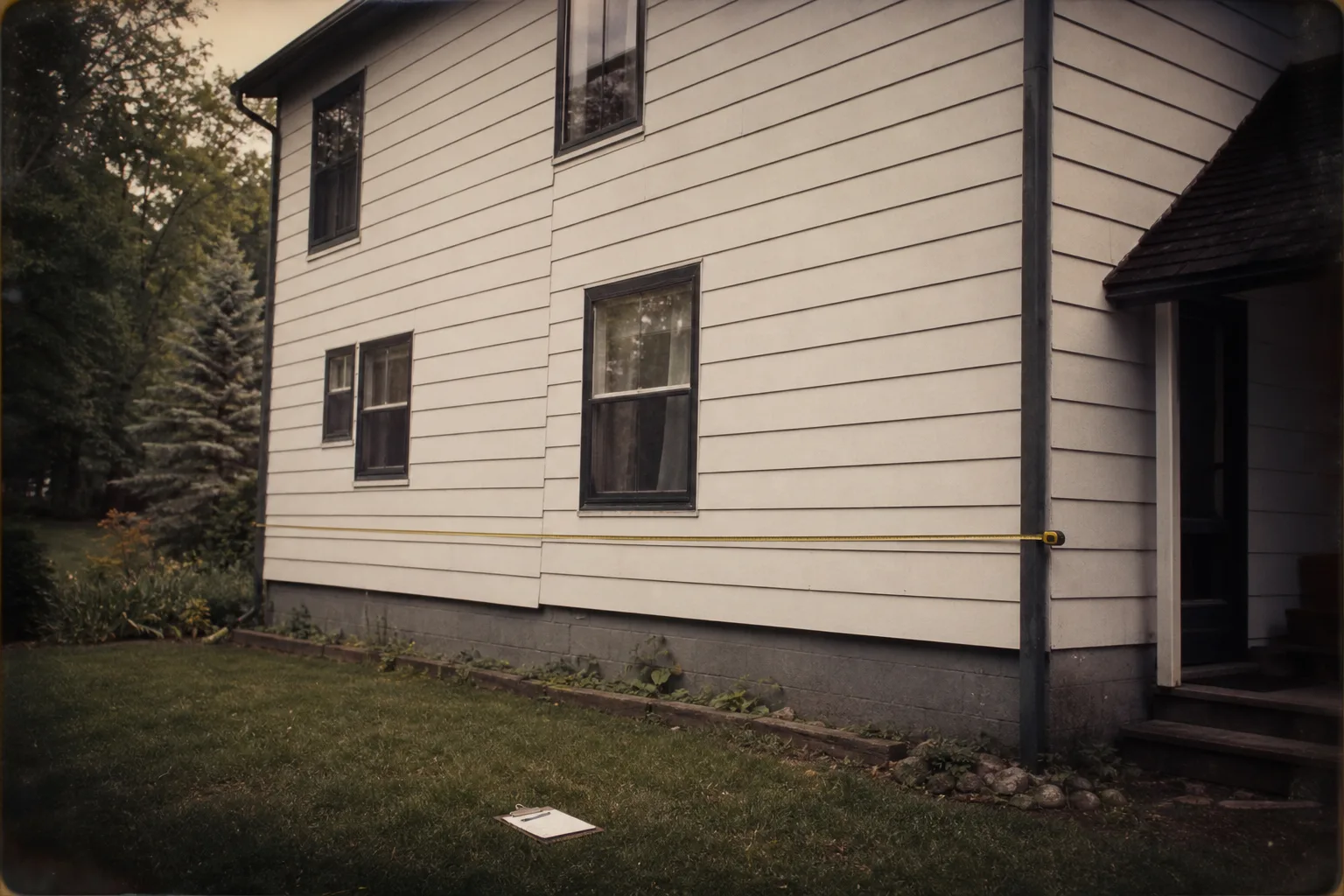
The goal is not a contractor grade takeoff. It is a defensible number that you arrived at yourself and can compare against the one on your policy, and three sources will get you there. Ask a local builder what they are currently charging per square foot for new residential construction of comparable quality, and ask whether that figure includes demolition, permits, and site work. Multiply by your measured finished area. Then add for anything on the list above that a per foot average would not capture.
Cross check the result against the carrier’s own estimating tool, which your agent can run and print, and against the actual cost of any recent substantial work you have had done, since a kitchen or a roof you paid for recently is the most accurate cost data you will ever have about your own house. If the three numbers cluster, you have your figure. If the policy limit sits meaningfully below all of them, that gap is the thing to fix, and fixing it usually costs less per year than most households assume.
The Endorsements That Close Whatever Gap Is Left
Even an accurate limit can be overtaken by events, which is what the optional coverages exist to absorb. Extended replacement cost pays a stated percentage above the dwelling limit, commonly a quarter or a half, and it is aimed squarely at the case where a regional disaster drives labor and materials up at exactly the moment everyone needs them. Inflation guard adjusts the limit automatically each year so the figure does not fall behind through simple neglect.
Two more are worth asking about by name. Ordinance or law coverage pays for the parts of a rebuild driven by current code rather than by the damage, which on an older house can be a substantial share of the bill once wiring, insulation, and structural requirements are brought current. Building code upgrades aside, a full replacement cost provision on the dwelling rather than actual cash value is the single most consequential line on the whole policy. A household that checks its square footage, asks a builder one question, and reads those three endorsement names has done in an afternoon the thing that determines whether the policy performs on the worst day the house ever has.