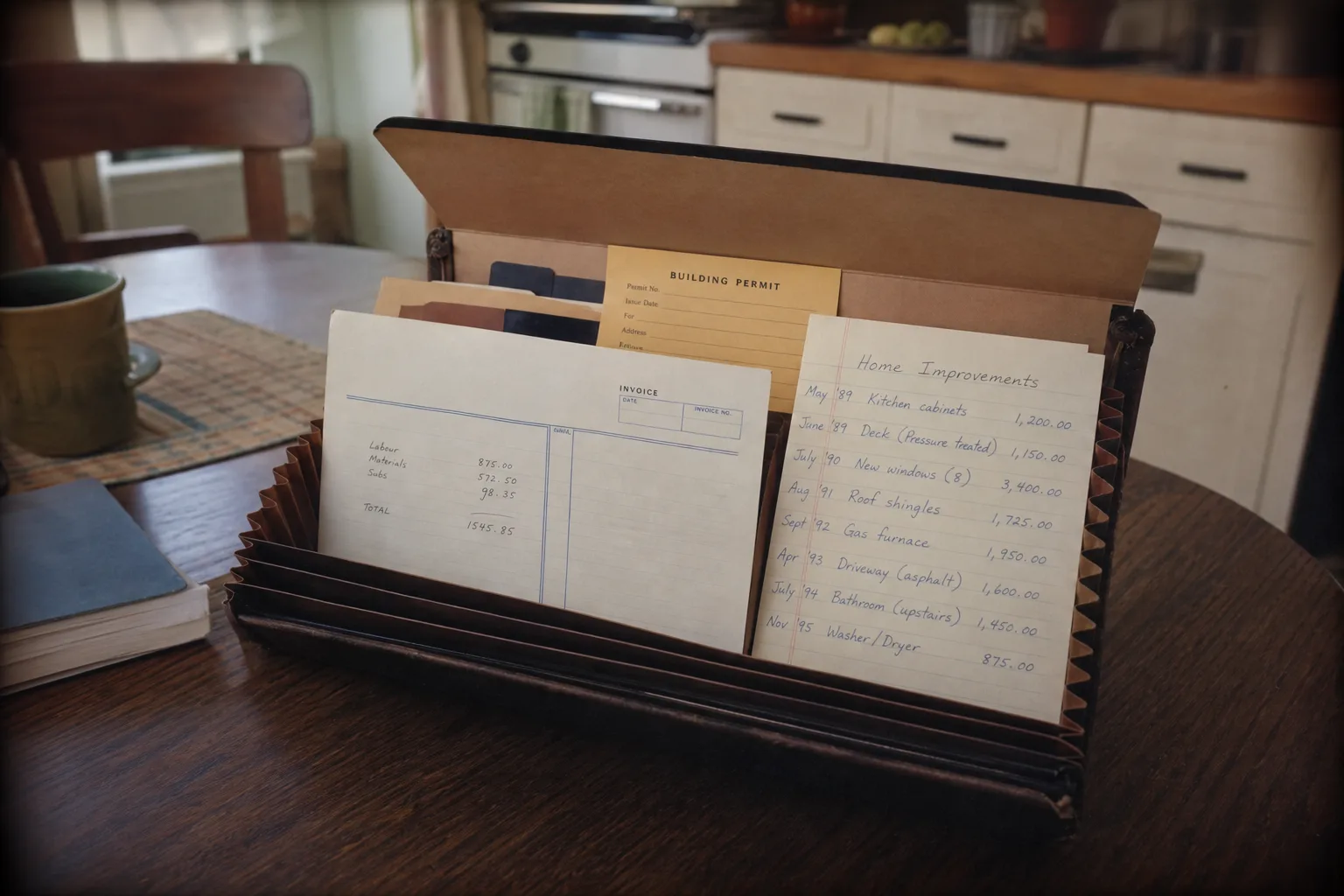
A retention period belongs to the event a document proves, not to the date printed at the top of it. That single reframing settles almost every argument about what to keep. A bank statement from March is transient. A contractor's invoice from the same March, for a roof, may still be the most valuable piece of paper in the house eighteen years later. Same month, same envelope pile, entirely different clocks.
Most filing advice sorts by document type, which is why it fails within a year. Sort by what the record would have to prove if someone asked.
Three buckets, and the roof invoice sits in the third
The first bucket is confirmation. A utility bill that has cleared, a credit card statement you have reconciled, a shipping notice. These prove a payment happened and nothing more. Once the payment shows up on the next statement and the return window has closed, they have no remaining job.
The second bucket is anything supporting a tax return. The IRS is responsible for setting the periods of limitation that govern how long a return can be examined or amended, and those periods generally run from the date the return was filed rather than the date on the receipt. The ordinary window is three years. It stretches longer where income has been substantially understated, and it does not begin at all where no return was filed. Practically, that means the documents behind a filed return should outlive the return by several years, not by several months.
The third bucket is the one people empty too early. These are records whose usefulness is triggered by a future event that has not happened yet. A home improvement invoice sits here. So does a title, a settlement statement, a permit, a survey.
Working the roof through properly
Say a household replaced a roof twelve years ago for a five-figure sum, paid by check, with an invoice and a permit card. Nothing about that transaction belonged on any tax return in the year it happened. There was no deduction to support. By the ordinary three-year logic, the paperwork was disposable long ago.
It was not. A capital improvement adds to the cost basis of the home, and basis is what determines gain when the house is eventually sold. A roof replacement is an improvement. Patching three shingles after a storm is a repair, and repairs do not add to basis. The invoice is what tells those two things apart years later, when nobody remembers the scope of work and the contractor has retired.
So the clock on that invoice does not run from the year of the work. It runs from the sale. The document has to survive until the period of limitations closes on the return reporting the sale, which is at minimum three years after that return is filed. On a house owned for thirty years, that is a thirty-three year retention period for a piece of paper that was never attached to a return until the very end.
The same reasoning governs the closing statement from the purchase, any addition or permitted renovation, and assessments paid for sidewalks or sewer connections. Keep a one-page running list at the front of that folder with date, contractor, amount, and a one-line description of the work. The list is what makes the folder usable to whoever opens it, including you.
The week-to-week version, which is about ten minutes
None of this works as an annual purge. It works as a weekly sort, because the sorting decision is easiest the moment the document arrives and hardest a year later.
- Open the mail next to a shredder and a single tray. Confirmation-bucket paper goes straight into the shredder once it has cleared. Everything else goes into the tray.
- Once a week, empty the tray. Tax-supporting items go into a single folder labeled with the tax year, not by category. Sorting by category inside a year is wasted effort; you will be pulling the whole folder anyway.
- Event-triggered items go into a permanent house folder, and the running improvements list gets one new line.
- For emailed receipts, forward them to one address or one labeled folder the same week. A receipt sitting in a general inbox is not a retained record.
Scan the event-triggered items. Name the file with the date first, then the vendor, then the work: 2013-06 Alvarez Roofing full replacement. That naming convention sorts itself chronologically and survives every device change you will make between now and the sale.
The clocks that do not run on the tax calendar
A manufacturer's warranty usually runs from the installation date, not the purchase date, which is why the installer's invoice matters more than the box. Homeowners claim files stay useful well past the claim because insurers ask about prior losses at renewal and at application. Contract disputes run on a state statute of limitations for written agreements, and that period is often longer than the tax window, so the signed contract outlasts the receipt for the final payment.
Vehicle titles, loan payoff letters, and anything that releases a lien belong with the permanent records. They are proof that an obligation ended, and there is no substitute if the other party's records are wrong.
The test, each week, is one question: if someone asks me to prove this, what event will they be asking about, and when could that event happen? Answer that and the file more or less builds itself.