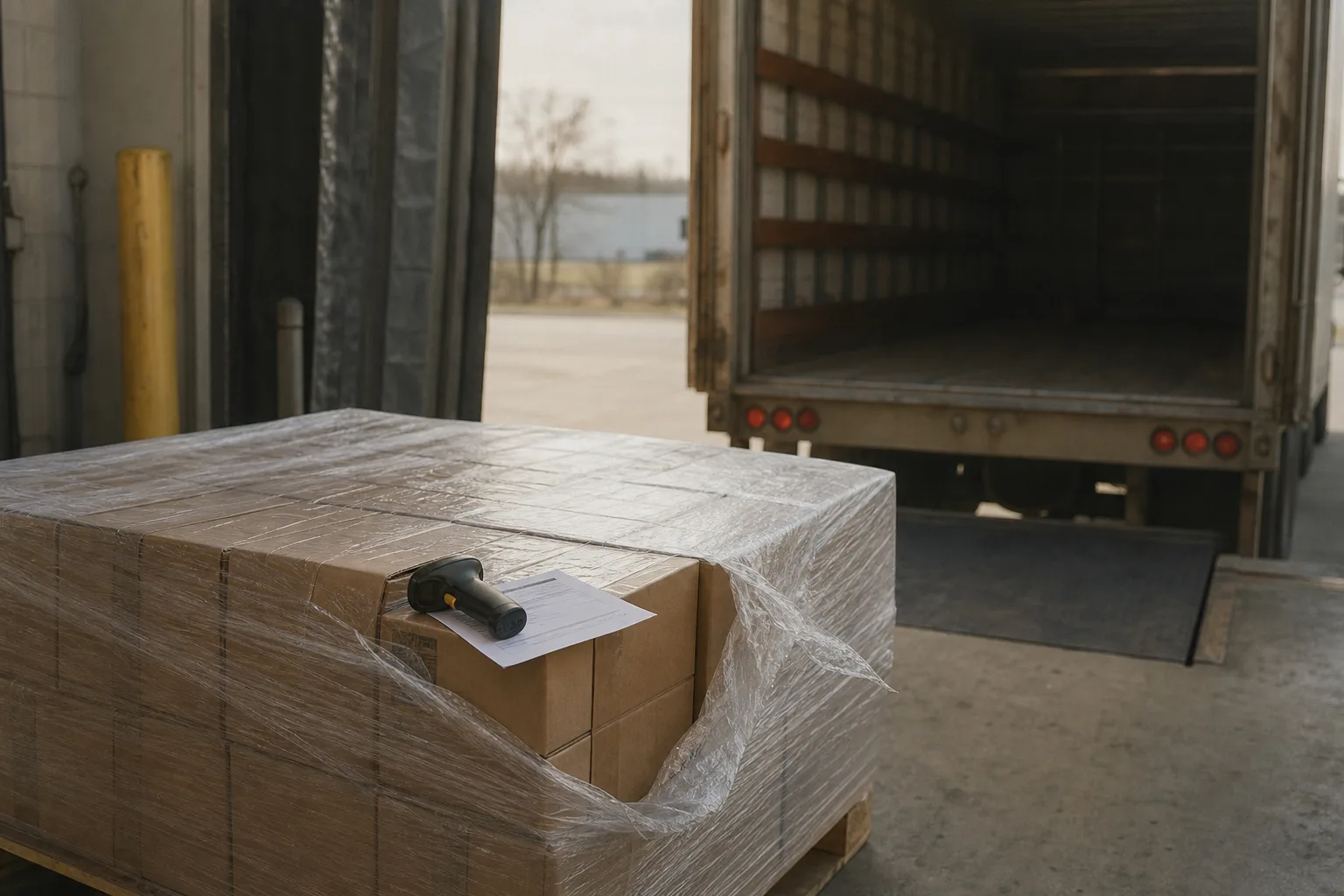
When a pallet arrives crushed, the loss does not land on whoever caused the damage. It lands on whoever cannot prove condition at a specific moment. That is the whole game, and the person holding the evidence is usually not you, your carrier or your warehouse. It is the receiving clerk at the other end, who has thirty seconds, a handheld device and no stake in your claim.
Ten years ago that clerk signed a paper delivery receipt. Today the same clerk taps a screen, and the carrier's system may already hold a timestamped photograph of the freight before the driver walked away. The mechanics of who carries the loss have not changed much. The evidence available to settle it has changed enormously, and most shippers have not adjusted how they pack or how they instruct the people who sign.
What actually changed, and what did not
The legal frame is largely the same. Interstate motor carriers still operate under a liability scheme that lets them limit exposure by weight and by commodity classification, and the Federal Motor Carrier Safety Administration remains the federal body responsible for registering and regulating those carriers. A carrier that limits its liability to a set amount per pound will still pay that amount per pound, no matter what your invoice says the goods were worth. Parcel carriers still distinguish declared value from insurance, and declared value still buys you a higher ceiling rather than a promise to pay.
What changed sits around the edges. Proof of delivery went from a signature scrawl to structured data with geolocation and, increasingly, images. Parcel networks moved large volumes to no-signature delivery with a photograph at the door, which cut theft disputes and created a new category of argument about what the photograph shows. Third-party parcel insurance became an ordinary line item rather than something only high-value shippers bought. Marketplaces began dictating prep and packaging requirements as a condition of inbound receipt, which quietly turned packaging from a cost decision into a compliance decision.
The practical effect: a claim in the current environment is won or lost on documentation that mostly did not exist a decade ago, and carriers are considerably better at using it than shippers are.
The overlooked party is the consignee's receiving desk
Almost every shipper's damage process focuses on two relationships: the one with the carrier and the one with the fulfillment provider. The receiving desk at the destination is treated as a passive endpoint. It is not. It is the only party present at the moment liability crystallizes.
A clean signature on a delivery receipt is a statement that the freight arrived in apparent good order. Carriers rely on it. A notation of exception, written on the receipt before the driver leaves, is what keeps a claim alive. Damage that is not visible until the shrink wrap comes off falls into a concealed damage category, and carrier rules typically allow only a short window to report it, measured in days rather than weeks. The window is short enough that a pallet sitting unopened in a customer's staging area for a week can time out before anyone looks at it.
So the useful work happens before the truck arrives. Tell your customers, in writing and in the shipping confirmation, what to do at the tailgate: count the pieces, look at every side of the pallet, photograph anything crushed, torn, wet or leaning, and write the specific defect on the receipt rather than signing "subject to inspection," which some carriers treat as meaningless. For freight moving into a marketplace or a 3PL on your behalf, find out who signs, what they are instructed to note, and whether their receiving report is something you can obtain later. Many shippers discover the answer only during a dispute.
Pack to the standard the claim will be judged against
Carriers routinely defend claims on the grounds that packaging was inadequate for normal handling. That defense is easier to run now, because handling is more automated and more photographed than it was ten years ago. It is also easier to defeat, if you have prepared.
Recognized packaging test protocols exist for exactly this purpose. Distribution testing programs published by the International Safe Transit Association and test methods from ASTM International describe drop, vibration and compression sequences meant to simulate transit. If your package passes a named protocol for its weight and route type, you have an answer to the adequacy argument that is not simply your own opinion. For anything you ship repeatedly, testing once is cheap relative to a year of damage allowances.
Two habits do most of the remaining work. Photograph the pack-out for high-value or fragile orders, including the void fill before the box closes, and retain the images against the order number. Standardize on documented box specifications and cushioning rather than whatever is on the bench, so that "how we pack this" is a written answer rather than an operator's memory.
Decide who carries the loss on paper, before you ship
Three documents allocate the risk, and they rarely align on their own. The carrier's tariff or contract sets the liability ceiling and the claim deadlines. Your warehouse or 3PL agreement sets its liability for goods in storage and in handling, often capped at a figure tied to storage fees rather than to inventory value. Your cargo policy, if you hold one, covers the gap.
Read the caps together and price the exposure. If the warehouse cap and the carrier cap both sit far below the value of a typical shipment, the uninsured middle is your balance sheet. Shippers' interest coverage or per-shipment insurance closes that gap, and for high-value SKUs it usually costs less than the damage allowance you are already absorbing.
A damage claim is an evidence exercise conducted under someone else's deadline. Shippers who write down the packing standard, insure the gap between the caps, and tell the receiving desk what to do at the tailgate settle most claims quickly and stop treating breakage as a cost of doing business.