Most people walk into a routine appointment with a rough plan for the conversation and walk out having had a different one. The visit was shorter than expected, a question that mattered surfaced somewhere near the door, and the answer arrived in the corridor at the pace of someone already thinking about the next patient. Neither of those things is a failure of the doctor or of the patient. They are the predictable result of a fixed budget of attention meeting an unstructured request, and almost everything that makes a short appointment go better comes from treating it as the budget it actually is.
Why the Visit Is Shorter Than It Feels Like It Should Be
A scheduled slot is not the same thing as time in the room. Between two appointments sits documentation from the previous one, a set of results that arrived overnight, a message queue, and the handful of minutes a nurse or medical assistant spends taking vitals and confirming medications. What remains for the conversation itself is often half of what the calendar promised, and it is compressed further by anything that has to be looked up mid-visit. None of this is hidden, and most clinicians will say so plainly if asked, but patients rarely plan around it because the appointment card gives a number and the number sounds generous.
The length of the slot also varies by what the visit was booked as, and the person who made the booking may not have known what it would turn into. A follow-up scheduled to review one set of results is a shorter appointment than an assessment of something new, and a request made at the desk for a quick check on one thing is frequently entered as the shortest slot the system offers. Saying at the time of booking that there are several matters to cover, or that something has changed since the last visit, is a small piece of information that often produces a longer appointment at no cost to anyone.
The First Ninety Seconds Decide What the Rest Is About
Whatever a patient says first becomes the agenda, and the most common opening is a narrative that begins several weeks before the part that matters. A more useful opening states the concerns up front and in order, naming two or three and saying which one is the reason for the visit, which lets the clinician allocate the remaining time deliberately rather than discovering the important item with four minutes left. The instinct to save the worrying question for last is understandable and it works against the patient every time. Saying at the start that there are three things, and that the third is the one keeping them awake, changes the shape of the entire visit.
What to Bring That Actually Changes the Conversation
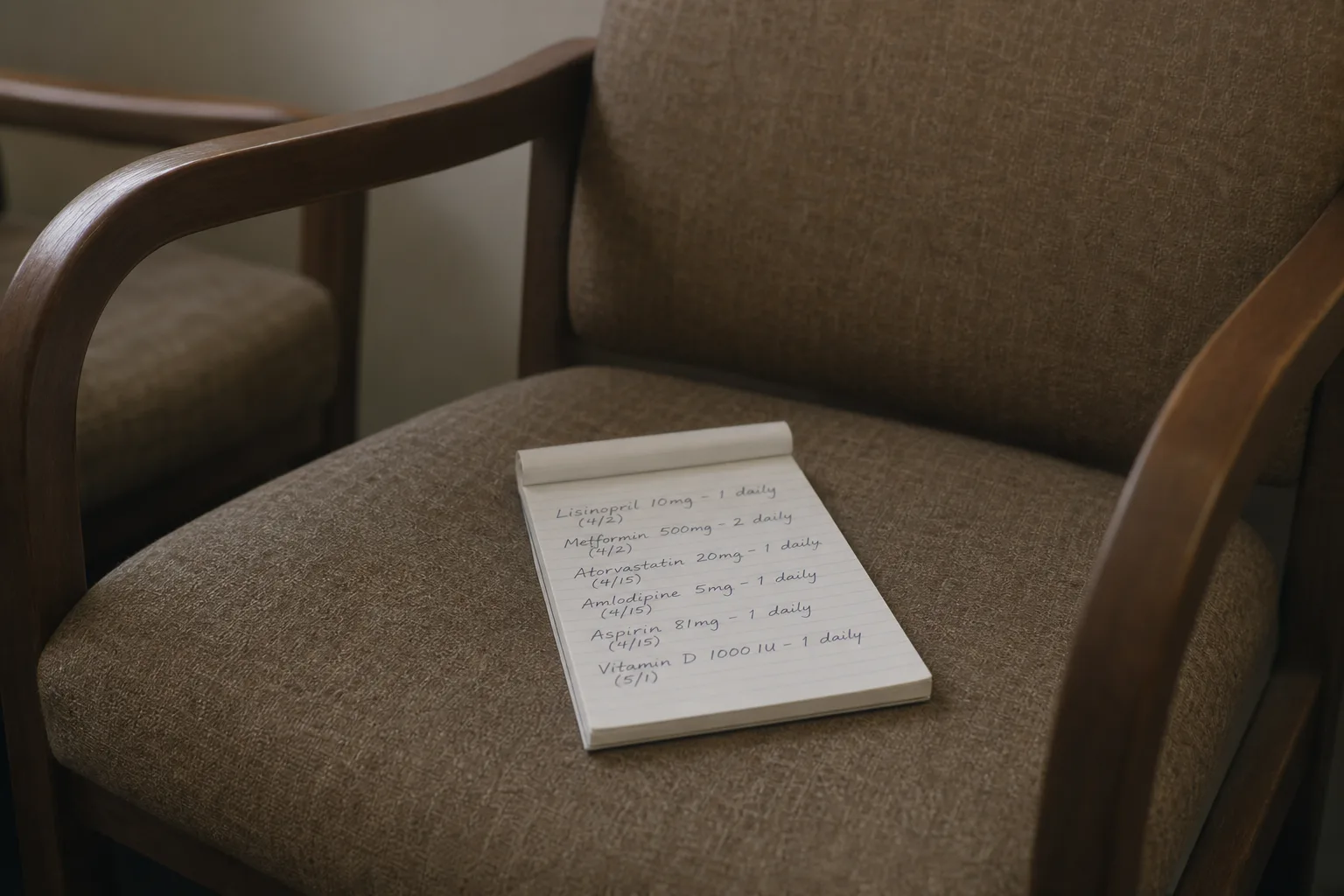
A written list is worth more than a good memory under the mild stress of a clinical room. The version that helps is short and specific: current medications with doses including anything bought without a prescription, when the symptom started and what makes it better or worse, what has already been tried and what happened, and any recent test done elsewhere. Vague duration is the most common gap, and the difference between three weeks and three months frequently changes the whole direction of the assessment. A patient who can say that the pain began in early September, is worse in the morning, and eased for a fortnight on an anti-inflammatory has handed over more diagnostic information in one sentence than ten minutes of open-ended description usually produces.
The Questions Worth Getting in Writing Before Leaving
Three answers are worth carrying out of the room in a form that survives the drive home. What is the working explanation, stated in plain language, including how confident it is. What would have to happen for the plan to change, which is the question that turns a wait-and-see into something a patient can actually act on. And what specifically should prompt a call back before the next scheduled visit, given as a symptom or a threshold rather than a general instruction to get in touch if things get worse. Asking the clinician to write those into the visit summary takes almost no time and produces a record that both sides can refer to later.
Preventive items are the other thing worth raising deliberately rather than hoping they come up, since a visit driven by a specific complaint tends to crowd them out entirely. The Centers for Disease Control and Prevention maintains the schedules that most primary care practices work from for immunizations and routine screening, and asking directly whether anything on those schedules is due converts a vague sense of being overdue into a definite yes or no in under a minute.
Why the Follow-Up Question Matters More Than the First One
The most valuable minute in a short appointment is usually the one spent on what happens next rather than on the diagnosis itself. A clinician who has explained a likely cause has given the patient something to hold, but a clinician who has also said how long it should take to improve has given them something to measure against, which is the difference between waiting and monitoring. That second answer also tells a patient when the current plan has failed, and knowing that in advance prevents both the unnecessary call at day three and the far more costly silence at week six.
When the Honest Answer Is That There Is Not Enough Time
Sometimes the right outcome is a second appointment, and saying so early is better than compressing two problems into one visit and resolving neither. A patient who names three concerns at the start may well hear that two of them are straightforward and the third needs a longer slot, which is a good result rather than a brush-off. Practices generally have a way to book that, and front desk staff can usually say which kind of appointment fits which kind of problem if the question is put to them directly.
None of this asks a patient to become an expert in anything, and none of it requires arguing with a clinician. It asks for the same preparation anyone would bring to a short meeting that matters, which is a clear statement of what is needed, the few facts that make answering possible, and a written record of what was decided. Ten minutes handled that way goes considerably further than twenty spent working out what the appointment was for.