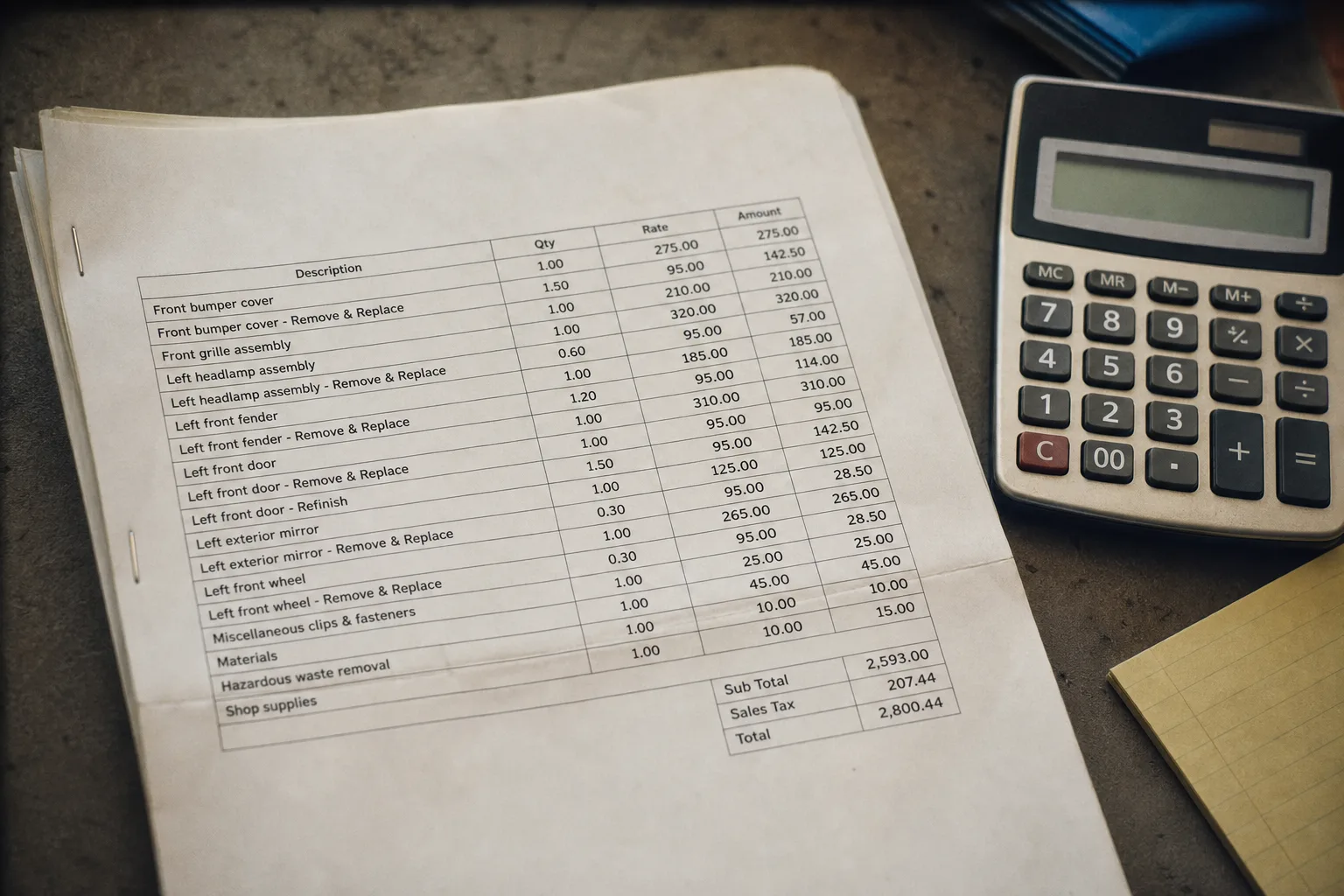
A month into a difficult claim, a homeowner has a carrier estimate they believe is too low, a contractor who says the scope is wrong, and no idea how to move between those two positions. This is the point at which somebody suggests a public adjuster, and the suggestion arrives attached to a number: a percentage of whatever is eventually recovered. The question is not whether the percentage is large but whether the same claim would have settled meaningfully lower without them, and that question can be answered fairly early.
What a Public Adjuster Actually Does
A public adjuster is licensed by the state, retained by the policyholder, and paid from the settlement rather than by the insurer. The work is not persuasion; it is documentation. They prepare an independent scope and estimate using the same software and pricing databases the carrier uses, they identify covered items an owner would not know to claim, they handle the correspondence and the follow up, and they present the file in the format a carrier’s process is built to accept.
That last point is the least obvious and frequently the most valuable. A carrier reviewing a line item estimate with photographs, measurements, and a written scope is performing a different task from one reading a letter explaining that a settlement feels unfair, and the claim settles differently because the file arrived in a form the process could actually accept. None of that requires anybody to be adversarial, which is the misconception most homeowners carry into the decision.
Where the Percentage Genuinely Earns Out
Four features predict it reasonably well, and they are visible within the first few weeks. A large or total loss, where small percentage differences in scope translate into substantial money. A contested cause of loss, where the carrier and the homeowner disagree about what happened rather than about what it costs. A scope that keeps growing as materials come open. And a household without the time, health, or stamina to manage months of documentation while also living somewhere else. Complex commercial and multi-unit losses sit firmly here too, since business interruption, code upgrade requirements, and coordination between trades produce a file that benefits from somebody whose full time job is assembling it, and in those cases the fee is paid out of money that would otherwise not have been recovered at all.
Where It Does Not, and Nobody Will Tell You
On a small, clean claim the percentage comes straight off a settlement the carrier was always going to pay. A single room water loss with an agreed cause, an undisputed scope, and a cooperative adjuster does not need a third party, and adding one converts a straightforward process into one with an extra participant and a smaller check. The same is true of any claim that is already close to the policy limit, since no amount of advocacy recovers more than the limit. It is also worth being clear that a public adjuster is not an attorney and cannot pursue a bad faith action or litigate a coverage denial. Where the dispute is about whether the policy covers something at all, rather than about how much the covered damage costs, the right professional is a different one, and a good public adjuster will say so rather than take the file.
Before Signing Anything at All
The representation agreement deserves an overnight read, and four things in it matter. The percentage, and whether it applies to the entire settlement or only to amounts recovered above what the carrier had already offered, which is a very large difference. Whether it applies to the emergency mitigation payments already made. What happens if you cancel, since most states provide a short statutory cancellation window. And exactly what the scope of the engagement covers. Verify the license with the state insurance department, which takes two minutes online, and be careful about anybody who appears at the door immediately after a regional event offering to handle everything. Several states restrict solicitation in the days following a disaster for precisely that reason, and the firms worth hiring are generally the ones already established in the area rather than the ones who arrived with the storm.
The Timing Question, and the Option in Between
Engaging one early means the file is built correctly from the start, which is where most of the value sits, and it also means the percentage applies to the whole settlement including the part that was never in doubt. Engaging one after an offer has been made means paying only on the improvement, and it means somebody is reconstructing a file from photographs that were taken by a homeowner who did not yet know what mattered.
The middle option suits more households than either extreme and is rarely mentioned. Many public adjusters will review a carrier estimate for a flat fee or an hourly rate, without taking the file, and tell you plainly whether the scope looks short and by roughly how much. That costs a few hundred dollars, answers the actual question a homeowner is asking, and turns the decision about the percentage into an informed one rather than a leap taken while standing in a damaged house.