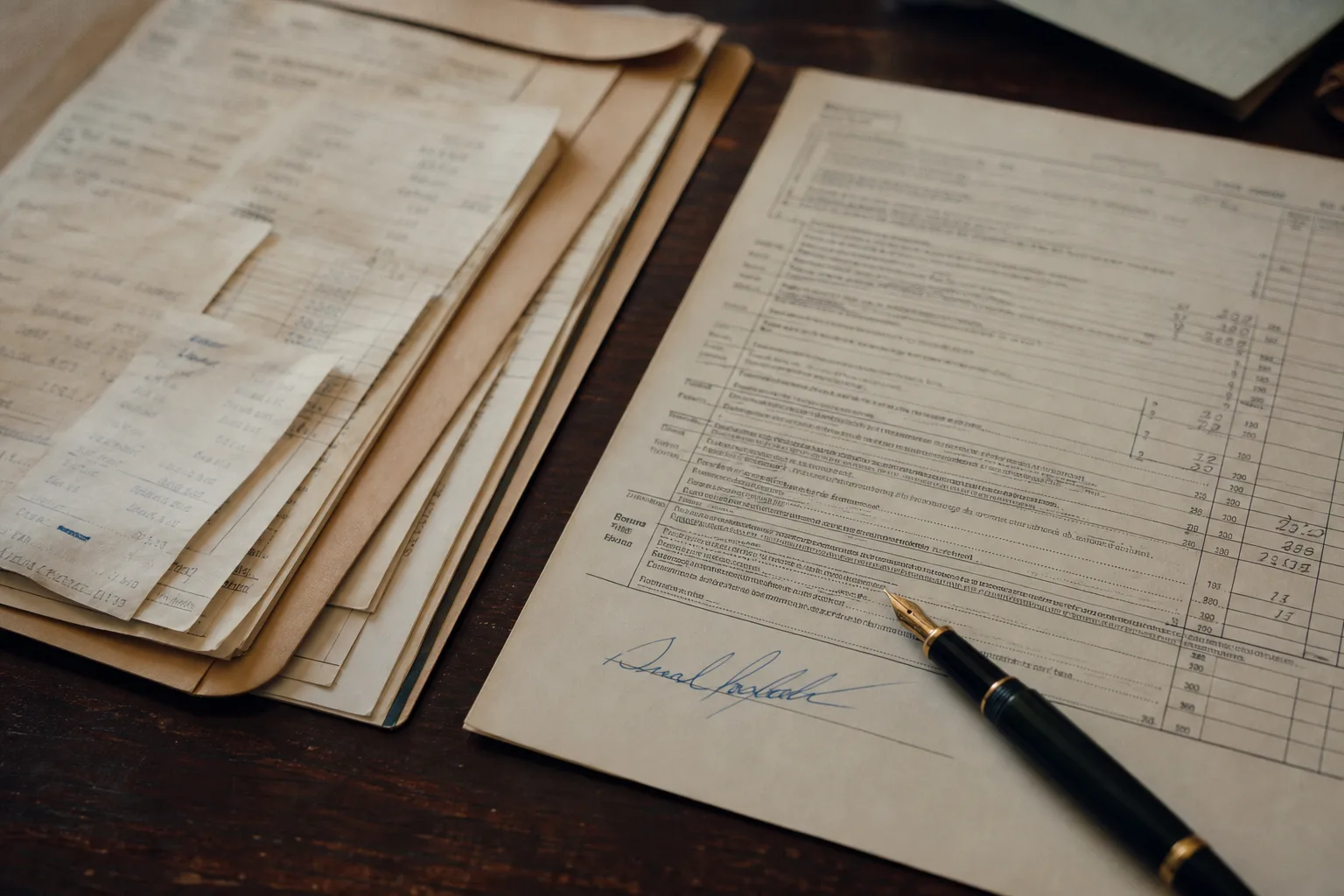
Ask a preparer why they said no to a deduction and the answer is rarely the one the client expected. It is almost never a judgment about whether the client is honest, and almost never caution for its own sake. It is a description of what happens to the preparer, personally, if the position turns out to be wrong. Understanding that the return carries two names rather than one explains most of the friction in that relationship, and it also points at the way to get a different answer next time.
What the Signature Actually Commits Them To
A paid preparer signs the return and includes an identifying number tying every return they touch to them individually. They are subject to penalties for positions lacking adequate support. Those penalties attach to the preparer rather than the taxpayer, they escalate where conduct is reckless rather than merely mistaken, and a pattern of them puts the credential itself at risk. This is why the same question gets a different answer from a preparer than from a friend in the same trade: a colleague describing what they deduct is describing a risk carried on their own return, while a preparer is being asked to underwrite the position with a credential they need in order to keep working.
The Refusals That Come Up Most, and What Sits Behind Each
The home office is the most common, and the resistance is rarely about the deduction, which is entirely legitimate, but about the word exclusively in the rule behind it. A room used regularly and exclusively for business qualifies; a dining table used for work and for dinner does not, and a preparer who has watched that distinction get tested knows exactly how the conversation goes. The answer is not that the deduction is unavailable, only that the facts have to be arranged so they fit it, which is a decision about next year rather than this one.
Vehicle mileage is the second, and it turns on records rather than on the rule. A contemporaneous log showing dates, destinations, and purposes is what supports the number, and a figure estimated in April from memory is not something a preparer can put a name to. The third is the meal or travel expense with a personal component attached, where the rule requires the business purpose to be primary and the documentation to show it, and where the honest answer is often that half of it qualifies and half does not.
Where a Preparer Can Genuinely Be Wrong
Not every no is correct, and a client is entitled to press, because preparers develop habits formed years ago under rules that have since changed and a firm handling mostly wage earners may simply be unfamiliar with what is ordinary in a particular trade. A refusal that arrives with a reason attached can be examined and sometimes reversed. A refusal that arrives as a flat statement that it cannot be done is worth a second opinion, particularly where the amount at stake comfortably covers the cost of getting one from somebody who works in that field every week.
The useful question is what would have to be true for the answer to change, since that single sentence converts a disagreement into a specification and the response names something concrete: a log, a separate room, a written agreement, an invoice showing what a payment was for. It also moves the conversation away from a judgment about you and toward a list of documents, which is far easier to act on. The Internal Revenue Service publishes the substantiation requirements for most common deductions in plain language, and reading the relevant page before the conversation tends to make it shorter and considerably more productive.
The One Thing That Cannot Be Fixed Afterward
Almost every disagreement in this area comes down to records that either exist or do not, created at the time or not created at all. A mileage log written in April describing the previous year is worth very little; the same log kept on a phone all year is worth a great deal, and the difference costs nothing but habit. Receipts, calendars showing appointments, invoices identifying what was purchased, and statements from an account used only for business all fall in the same category. This is the half of the relationship a client controls completely, and a client who brings a year of clean records tends to hear yes to things they expected to be refused.
How to Get a Defensible Yes Instead of an Argument
Ask in advance rather than in filing season, since a preparer in March is triaging four hundred returns and the same person in September has time to look something up properly. Bring the facts rather than the conclusion, describing what you actually do and letting them tell you what it supports, which avoids the conversation where you argue for an answer you found somewhere online. And when the answer is still no, ask what it would take, then decide whether the change is worth making for next year.
The refusals stop feeling personal once the second signature is visible. A preparer saying no is not doubting the client; they are declining to put their own name behind a number nobody can support, which is exactly what you would want from somebody preparing your return. The clients who get the most out of the relationship treat that second signature as a shared standard rather than an obstacle, and arrive in February with the folder that makes saying yes easy.